


The False Prophecies of Environmentalism
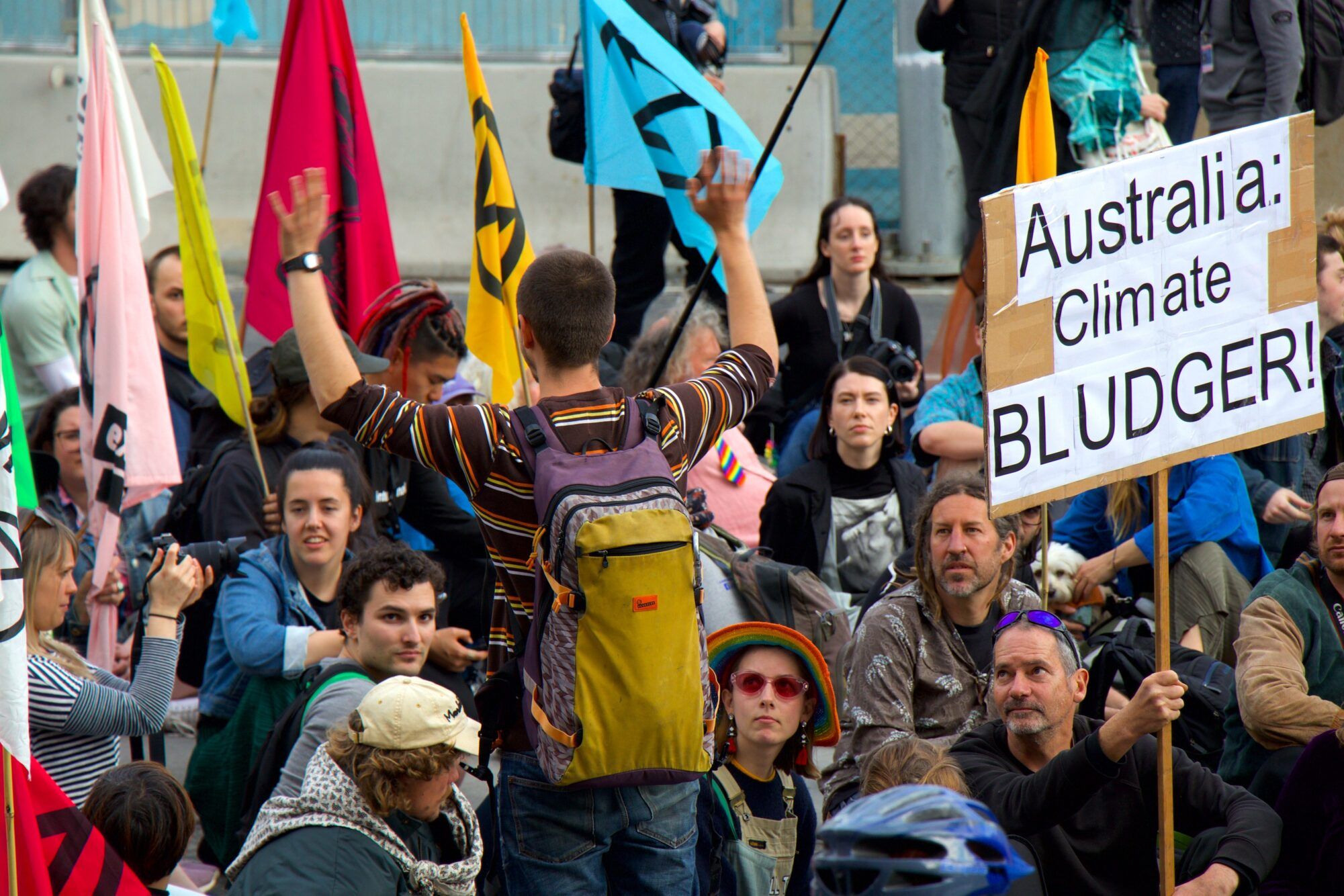
With the recent bushfires that have ravaged the eastern coast of NSW, many are proclaiming that the prophecies of environmentalists are being fulfilled before our very eyes.
Leader of the global climate movement — 16-year-old Greta Thunberg — recently proclaimed the impending apocalypse of the world:
“Entire ecosystems are collapsing. We are in the beginning of a mass extinction, and all you can talk about is money, and fairy tales of eternal economic growth. How dare you!”
But how bad are things, really?
Sadly, we live in a post-truth age, which means that unbridled hysteria often trumps reality.
And this mania is not restricted to the media — it is often most prevalent amongst academics, who are notorious for making Neo-Malthusian prophecies about the end of the world.
As we will soon see, the false prophecies of academics can have disastrous results, often on government policy, leading to a myriad of social ills.
Nonetheless, we rarely — if ever — see academics being held to account for their prophecies when they turn out to be false. This is particularly evident amongst environmentalists, who seem to constantly be warning that we are nearing doomsday due to various human activities.
Here are just three false prophecies that environmentalists have made, as well as their disastrous effects:
-
Paul Ehrlich’s Population Bomb (1968)

Probably the most dangerous false prophet over the past 50 years has been Stanford Professor of Population Studies — Paul R. Ehrlich.
Awarded with countless humanitarian awards, Dr. Ehrlich is most known for his 1968 book, The Population Bomb, in which he made predictions about the dire effects of ‘overpopulation.’
In a 1970 interview, Dr. Ehrlich predicted that:
“[The] population will inevitably and completely outstrip whatever small increases in food supplies we make. The death rate will increase until at least 100-200 million people per year will be starving to death during next ten years.”
To solve this make-believe apocalypse, Dr. Ehrlich advocated for sterilisation and forced abortion:
“Indeed, it has been concluded that compulsory population-control laws, even including laws requiring compulsory abortion, could be sustained under the existing Constitution if the population crisis became sufficiently severe to endanger the society.”
It’s no wonder why China implemented its One-Child Policy in 1980, leading to the slaughter of millions — if not billions — of babies through abortion since the implementation of the policy.
-
Paddock Brothers’ Famine 1975! America’s Decision: Who will survive? (1967)
William and Paul Paddock published Famine 1975! as a dire prediction of what would happen to rapidly growing third-world nations if the United States did not dramatically increase its foreign aid.
Consequently, the Paddocks predicted a worldwide famine that would lead to the deaths of millions worldwide.
Harvard biologist — George Ward — echoed these predictions in 1967:
“civilization will end within 15 or 30 years unless immediate action is taken against problems facing mankind.”
These men couldn’t have been more wrong.

Source: Maxim Pinkovskiy, Xavier Sala-i-Martin, AEI
Following their predictions — over the following 30 years — we witnessed the greatest decrease in poverty that the world has ever seen.
It was not international aid that decreased poverty. Moreover, agricultural production did not halt in third-world nations.
Rather, increased industrialisation, transport, and global commerce caused the the global extreme poverty rate to decrease from 28 per cent in 1970 to less than 10 per cent today.
-
Rachel Carson’s Silent Spring (1962)

Published in 1962, Rachel Carson’s Silent Spring warned of the catastrophic environmental and humanitarian effects of using synthetic pesticides — particularly DDT.
In her best-selling book, Carson — known by many today as the founder of ecofeminism — warned how DDT was responsible for cancer, ecological disruption, and environmental degradation.
While she didn’t advocate for an all-out ban on the use of pesticides, her book created a state of chemophobia that led to the 1972 banning of DDT in the US by the EPA.
By 2006, the World Health Organisation announced the reimplementation of DDT after realising its powerful ability to prevent and cure the spread of malaria.
But by this time, it was far too late. The damage had already been done.
Before Silent Spring was published, DDT was being effectively utilized to fight malaria worldwide— a disease which was responsible for millions of deaths.
As J. Gordon Edwards wrote in his 1992 essay ‘The Lies of Rachel Carson,’
“The National Academy of Sciences concluded in 1965 that “in a little more than two decades, DDT has prevented 500 million [human] deaths that would otherwise have been inevitable.” The World Health Organization stated that DDT had “killed more insects and saved more people than any other substance.” A leading British scientist pointed out that “If the pressure groups had succeeded, if there had been a world ban on DDT, then Rachel Carson and Silent Spring would now be killing more people in a single year than Hitler killed in his whole holocaust.”
Consider the incredible impact DDT was making on the number of deaths caused by malaria in India and Sri Lanka before Silent Spring was published.
-
Sri Lanka (1946-56): Deaths caused by malaria decreased from three million to 7,300 per year.
-
India (1951-61): Deaths caused by malaria decreased from 75 million to 50,000 per year.
After Silent Spring was published, third-world nations were driven to ban DDT out of fears of its adverse long-term effects on human populations and the environment.
-
Sri Lanka (1964 to present): After banning DDT, cases of malaria had ‘risen from seventeen to over half a million’ between 1964 and 1969. After reinstating DDT in 2006, Sri Lanka is now considered ‘malaria free.’
-
India (1961 to present): India did not ban DDT. Despite rapid population growth from 458.5 million in 1961 to 1.34 billion in 2019, India has a meagre 20,000 deaths from malaria annually.
Conclusion:
If these three false predictions teach us anything, they ought to reveal the catastrophic results of the false prophecies of academic doomsday prophets.
Sadly, the contemporary climate change movement shows all the signs of wild emotionalism, and as we have seen — time after time — it is not the wealthy who suffer for their utopian policies, but the poor.
Millions — dare I say billions — of people in other nations have suffered and died as a result of false climate prophecies over the past 50 years.
As Bjorn Lomborn wrote,
“As matters stand, however, the world is in great danger of spending scarce resources on climate policies that hurt rather than help its poorest people. Governments should instead focus on growth-enhancing measures such as trade liberalization that provide a pathway to increased welfare and greater equality.”
___
One Comment
Leave A Comment
Recent Articles:
30 January 2026
3.9 MINS
A pending U.S. Supreme Court case over conversion therapy bans and free speech could influence Australian law, as faith-based counsellors argue viewpoint discrimination and client choice in therapy.

30 January 2026
3.5 MINS
Two radical Islamic terrorists showed Australia just how evil antisemitism could be. “Hate speech and gun laws will fix that.” Many disagreed. The government has ways to fix that, too.

30 January 2026
7.6 MINS
A fiery critique of Australia’s political and religious sensitivities, defending Scott Morrison’s call to confront Islamic extremism and accusing leaders of avoiding hard truths in the name of social cohesion.

30 January 2026
6.3 MINS
Militants storm a Nigerian church, abducting dozens and shattering families, as survivors plead for help. With government denial and rising terror, faith and international pressure become desperate lifelines.

30 January 2026
5.6 MINS
The U.S. raid capturing Venezuela’s Maduro on January 3, 2026, revives the Monroe Doctrine, reshaping hemispheric power, disrupting narco-terror networks, and sending shockwaves to China, Russia, Iran, and Cuba.

29 January 2026
2.1 MINS
After Australia Day tensions, returning media figure Nancy Bell delivers a delayed national message blending satire, identity politics commentary, and cultural critique, positioning himself once again as a provocative Australian voice.

29 January 2026
3.7 MINS
Reports of mass killings in Iran coincide with rising U.S. military pressure and sanctions, as experts warn the death toll is unclear, but the regime’s brutal crackdown is undeniable.





Would the immediate death of Greta Thunberg actually save lives? Food for thought