


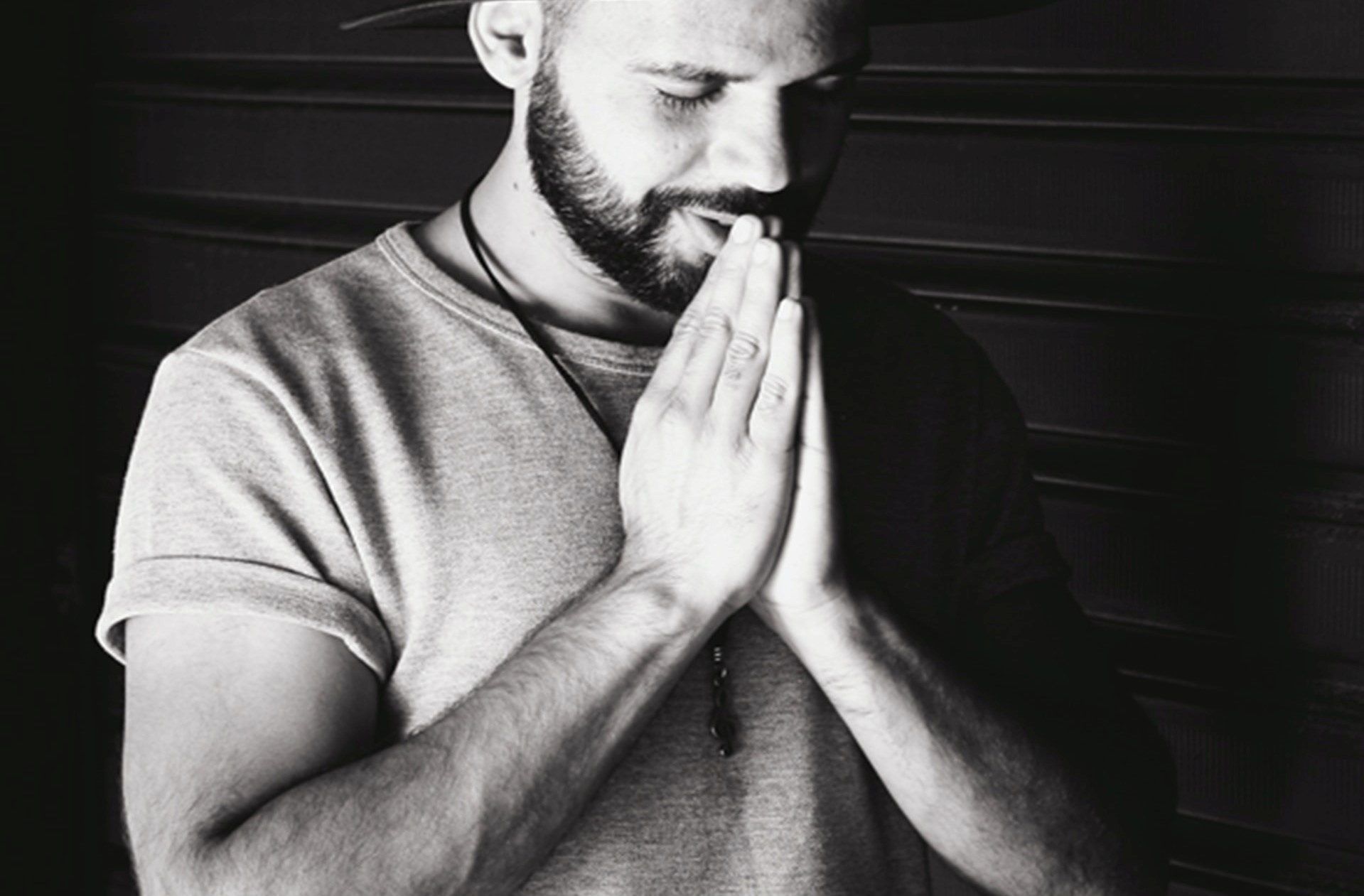
Requirements For Revival – Part 1
Repentance for one’s failings and a heart for lost sheep are necessary precursors to revival. To reap a fruitful harvest, we must prepare the ground with care.
Recently I wrote about what I saw as some of the current situations and attitudes that hinder revival, and what is required from us to facilitate a new move of God’s Spirit, which I identified as “the common denominator” of all revivals; “a burning desire to see God bring transformation to the whole of society”.
This “burning desire” is actually the consequence of an alignment of our heart’s desire with God’s. So we need to understand that this involves two seemingly opposite manifestations. First, God’s grief, longing and mourning for those who don’t know Christ. Second, God’s passion and joy showered down on His beloved as a means of facilitating the first. We need to experience both.
And it’s the first that I am dealing with here, while I will cover the second in my next article.
I’m sure we’ve all experienced the joy of the Lord at times in our Christian walk to varying degrees. In fact, in times of previous visitations, there are many who have experienced such waves of joy and delight that it takes one to the limits of what can be endured both physically and emotionally. In short, it “surpasses all comprehension” (Phil 4:7 NASB).
But this alone should not be our experience of the outpouring of the Holy Spirit in revival. Without an equal expression of God’s grief and mourning for the lost and for the state of His Creation, it is unbalanced and is not true revival.
And it’s the latter which should provoke in us the most significant, and most absent, component for true revival — prayer. And not just any prayer, but burdened praying that reflects the burden of God’s heart for the lost.
Deliverance
In fact, as this account from Dr Michael Brown’s book From Holy Laughter to Holy Fire shows, such praying is that which will “rend the heavens” (Isaiah 64:1 NKJV).
In one of the most famous accounts from the Hebrides Awakening [1949-53], Duncan Campbell describes what took place during an all-night prayer meeting. He had just arrived to begin a series of meetings. Many of the believers had a great sense of expectation, but as a whole, the people in the area were resistant to the Gospel.
A deacon said to him that night, ‘Mr Campbell, God is hovering over, and He is going to break through’. Yet the meeting was completely ordinary. Still, the deacon was confident and said to Campbell, ‘Do not be discouraged. God is coming. Already I hear the rumbling of heaven’s chariot wheels.’
The deacon suggested that they spend the night in prayer, and so about 30 of them gathered in a cottage to seek the Lord. They battled without a breakthrough, until Campbell felt led to ask the blacksmith to pray. After praying for 30 minutes (as Campbell noted, ‘in revival, time doesn’t matter’), the blacksmith closed with these bold words, ‘God, do you not know Your honour is at stake? You promised to pour floods on dry ground, and You are not doing it.’ He then stopped, waited, and concluded with these words, ‘God, Your honour is at stake, and I challenge You to keep Your covenant engagements.’
And how did God respond? ‘That whole granite house shook like a leaf’, said Campbell. Some present thought there had actually been an earth tremor, but Campbell thought at once of Acts 4:31. He related:
‘I saw about a dozen men and women prostrated upon the floor. They lay there speechless as God gave His witness to their hearts. He had taken the field. The forces of darkness were going to be driven back. Sinful men were going to be delivered. We knew that something had happened.
And when we left that cottage at three o’clock in the morning, we learned what it was. Everywhere men and women were seeking God. As I walked along the country road, I found three men on their faces, crying to God for mercy. There was a light in every home; no one seemed to be thinking of sleep.’
Repentance
But before we can truly manifest prayer that will “rend the heavens”, we need to examine ourselves and deal with our own failings and sins (yes, sins!) to be a fit vessel to contain any outpouring like the one in the Hebrides, as Campbell’s own account of what preceded this outpouring of God’s Presence in power reveals:
“How did this gracious movement begin? In 1949, the local presbytery issued a proclamation to be read on a certain Sunday in all the Free Churches on the island of Lewis. This proclamation called the people to consider the ‘low state of vital religion… throughout the land… and the present dispensation of Divine displeasure… due to growing carelessness toward public worship… and the growing influence of the spirit of pleasure which has taken growing hold of the younger generation’.
They called on the churches to ‘take these matters to heart and to make serious inquiry what must be the end if there be no repentance. We call upon every individual as before God to examine his or her life in light of that responsibility which attends to us all and that happily in divine mercy we may be visited with a spirit of repentance and turn again to the Lord whom we have so grieved’.
I am not prepared to say what effect the reading of this declaration had upon the ministers or people of the island in general, but I do know that in the parish of Barvas a number of men and women took it to heart, especially two old women. I am ashamed to think of it — two sisters, one eighty-two and one eighty-four, the latter blind. These two women developed a great heart concern for God to do something in the parish and gave themselves to waiting upon God in their little cottage.
One night God gave one of the sisters a vision… In the vision, she saw the churches crowded with young people and she told her sister, ‘I believe revival is coming to the parish’. At that time, there was not a single young person attending public worship, a fact which cannot be disputed. Sending for the minister, she told him her story, and he took her message as a word from God to his heart. Turning to her, he said, ‘What do you think we should do?’
‘What?’ she said, ‘Give yourself to prayer; give yourself to waiting upon God. Get your elders and deacons together and spend at least two nights a week waiting upon God in prayer. If you will do that at your end of the parish, my sister and I will do it at our end of the parish from ten o’clock at night until two or three o’clock in the morning’.
So, the minister called his leaders together and for several months they waited upon God in a barn among the straw. During this time they pleaded one promise, ‘For I will pour water upon him that is thirsty, and floods upon dry ground: I will pour My spirit upon thy seed, and My blessing upon thine offspring’ (Isaiah 44:3). This went on for at least three months. Nothing happened.
But one night a young deacon rose and began reading from Psalm 24, ‘Who shall ascend into the hill of the Lord? Or who shall stand in his holy place? He that hath clean hands, and a pure heart; who hath not lifted up his soul unto vanity, nor sworn deceitfully. He shall receive the blessing from the Lord, and righteousness from the God of his salvation’ (Psalm 24:3-5).
Closing his Bible, he addressed the minister and other office bearers in words that sound crude in English, but not so crude in our Gaelic language, ‘It seems to me so much humbug. To be waiting as we are waiting, to be praying as we are praying, when we ourselves are not rightly related to God.’
Then, he lifted his hands toward heaven and prayed, ‘O God, are my hands clean? Is my heart pure?’ Then, he went to his knees and fell into a trance. Now, don’t ask me to explain the physical manifestations of this movement because I can’t, but this I do know, that something happened in the barn at that moment in that young deacon. There was a power loosed that shook the heavens and an awareness of God gripped those gathered together.”
What comes out of this for me is that a person with a heart burdened for the lost will also discover the burden in their spirit for their own failings, which produces “godly sorrow” (2 Corinthians 7:11).
Recently, a friend on Facebook shared this: “We need to weep to reap! Now is the time!”
Then, as I was preparing this article, I happened to watch a session from the 2016 Hillsong Conference led by Bobbie Houston, which she titled “Latter Day Tears”, where she was preaching in reference to Luke 19:41-44, where the nation of Israel missed their particular “day of visitation”:
“When Jesus approached Jerusalem, He saw the city and wept over it, saying, ‘If you had known on this day, even you, the conditions for peace! But now they have been hidden from your eyes.
For the days will come upon you when your enemies will put up a barricade against you, and surround you and hem you in on every side, and they will level you to the ground, and throw down your children within you, and they will not leave in you one stone upon another, because you did not recognise the time of your visitation.’” (Luke 19:41-44 NASB)
She then proceeded to draw a comparison with our times:
“The times in which we find ourselves are in need of our tears. It’s a need of heightened Christ-like response, the kind that draws near and weeps for their day of visitation, for them to know that He indeed is their peace. This world needs a critical day of visitation. This world needs a revelation that the only peace to be found in these coming days is in Jesus Christ. He is our peace.
“So when we see events in the world unfolding, the Bible doesn’t say that peace will be prevalent in these days. These are perilous, treacherous days that we are entering into, so we need to pray that the peace of God will be so prevalent in our own lives that it will be felt by those we encounter.
“I once heard a priest in the Vatican say, ‘When you encounter brokenness and pain, bend low, weep, and then point them to Jesus’. We are living in a world full of fear, of easily stirred intolerance and hatred, of increasing xenophobia, racism of all kinds sits not far beneath the surface in most nations.
“So what would God have us do? Run? Hide? React? Judge? Or bend low, weep with those who are weeping, allow empathy to become intercession that invariably locks and unleashes the miraculous?”
Here’s the bottom line: as I said in my first article on revival, the manifestations and distinctions will always be different. But in every single revival, it is the kind of burdened prayer and intercession that we need to exercise once we’ve risen above those worldly aspirations of peace and prosperity I also mentioned in that article. It’s this kind of praying that God will use to “light the blue touch-paper” through visitation.
In all of this, remember the promise: “Weeping may last through the night, but joy comes with the morning.” (Ps. 30:5b NLT) and “Those who plant in tears will harvest with shouts of joy. They weep as they go to plant their seed, but they sing as they return with the harvest.” (Ps. 126:5-6 NLT)
In that respect, I can’t think of a better way to finish than with a song that encapsulates every facet of what I’ve mentioned here, with lyrics that I find are literally dripping with anointing and power.
___
Photo by Matheus Ferrero on Unsplash.
2 Comments
Leave A Comment
Recent Articles:

18 September 2026
4.4 MINS
Up to 10,000 rallied in Sydney for a ban on sex-selective abortion. Twenty-four hours later, the NSW Legislative Council defeated John Ruddick's bill 21–16. The fight, says Dr Joanna Howe, is just beginning.

18 September 2026
3.5 MINS
Brothers Luke and Joel Smallbone have become one of the world's most loved Christian pop acts. As For King & Country, they have won four Grammys, 15 GMA Dove Awards and billions of song streams. And today they releasing their latest album.

18 September 2026
4.9 MINS
The government's $75 million deradicalisation program isn't working — and some wannabe terrorists have left more radical. So it's announced a new plan — which forbids identifying what's doing the radicalising.

18 September 2026
2.1 MINS
"Trans women are women." Repeat it enough and it starts to feel true. That's not an argument — it's a propaganda technique. And Australia's courts are now enforcing gender ideology.

17 September 2026
3.9 MINS
The NFL landed in Australia with a flyover, celebrities, and a 100,000-strong crowd. What caught the internet's attention was something the MCG hasn't seen much of lately: unashamed, public Christian faith.

17 September 2026
2.8 MINS
"A good mom if you strangle your kids — but lose custody for protecting your daughter from being castrated and mutilated by the gender lobby." That's Massachusetts today, where a Catholic couple lost their teenage girl for refusing to affirm her transgender identity.

17 September 2026
5.7 MINS
The Federal Labor Government is proposing to expand assisted suicide via telehealth — a choice to die over a video call, without a doctor ever being in the room. That's not compassion. That's the state deciding your life isn't worth the cost of a face-to-face visit.



Thank you Kim . It has been so long since I have been to a Church (long story).
I spend a lot of time talking with Him day and night but…….your article was almost as nourishing as a sermon in a Church filled to overflowing with his people .
I really believe that you need to find a church that you can call home. And it’s not just one that meets your felt needs, but one that you can contribute to. Many years ago God showed me that, in line with what Paul wrote in 1 Corinthians 12, in particular, “if one part of the body suffers, all the parts suffer with it; if a part is honored, all the parts rejoice with it. Now you are Christ’s body, and individually parts of it.” (vv. 26-27).
In other words, there’s a body of believers out there somewhere that is diminished for you not being part of it, as you are equally diminished for the same reason.
I’m pleased to know I’ve nourished you, but you need to find more long lasting nourishment in a church fellowship.