



Is Twitter Really a Public Square?
Been watching with interest the Elon Musk saga over at Twitter, and reflecting on the way people are trying (and struggling) to conceptualise the platform.
There is much talk about it being a kind of town square or public square. This is wrong and misleading.
The truth is that Twitter is unprecedented, which is what makes it such a confounding, but also very interesting, conceptual problem to ponder. It is also what produces so much faulty analysis as people grope for misleading analogies from the past.
Faulty Premise
Others have pointed out that the very notion of a town or public square in which free speech and the exchange of ideas occurs is probably spurious. I mean, do we really think hundreds, or thousands, of residents gathered for hours on end in small towns all over the world to engage in political debate and other conversations?
Even if this were the case, the scale of Twitter blows this analogy out of the water and into irrelevance. Twitter has something like 240 million daily users spread across the entire globe. Moreover, Twitter is not a town square, but millions of squares of varying sizes. I mean, Twitter consists of millions of discrete conversations across geographic boundaries 24/7. It literally never shuts down and most users participate in only a microcosm of the vast macrocosm that is Twitter.
Then throw in sound, images, videos, memes, emojis, retweets, likes, links to other sites, dms (direct messages), hashtags and more and you begin to see that this is very unlike even the myth of the town square as we now conceive it.
Corporation
Besides, the “public” aspect of Twitter, which is how it can feel given anyone can start an account, tweet and read other people’s tweets for free and publicly, masks the fact that Twitter is owned and operated by Twitter, Inc., a publicly traded company (at least for the time being), which makes its money by monetising users’ metadata and selling targeted advertising.
This. Is. Not. How. A. Town. Square. Functions.
It would be akin to a private individual or party owning the town square, letting people come and speak publicly there for free, but listening to their conversations, gleaning their interests, fears and desires, and then selling this information to traders who could come and gather at the square and market their products to the speakers and their audiences.
Twitter is the product of a digital advertising company (probably about to move into the subscription game) and it is only free and public because that is how Twitter, Inc. can monetise your data. In fact, your metadata is the product that Twitter, Inc. sells and the platform Twitter is simply the very large vat Twitter, Inc. uses to collect that valuable data.
Moreover, it is an extremely unsuccessful business. Successful in terms of adoption and cultural impact, sure. But as a business it is terrible. I don’t think it has ever turned a profit and right now it is bleeding 4m in losses daily. Hence Musk’s slash-and-burn strategy.
This brings me back to “unprecedented.”
What we have is a corporation that has a fiduciary responsibility to return a profit for its investors, which seeks to do so by selling digital advertising by monetising its users’ metadata, while setting terms and conditions that are clearly geared to make it safe for advertisers (it has no choice given its investor obligations).
Do you see how silly it is to complain about free speech on Twitter? Twitter doesn’t exist to promote free speech.
Welcome to the 21st century and the new era of corporate-controlled, commodified digital speech.
___
Originally published on Dr Jonathan Cole’s page.
Subscribe to his podcast, The Political Animals, for more insights.
Photo by Alexander Shatov on Unsplash.
One Comment
Leave A Comment
Recent Articles:
8 October 2026
4.1 MINS
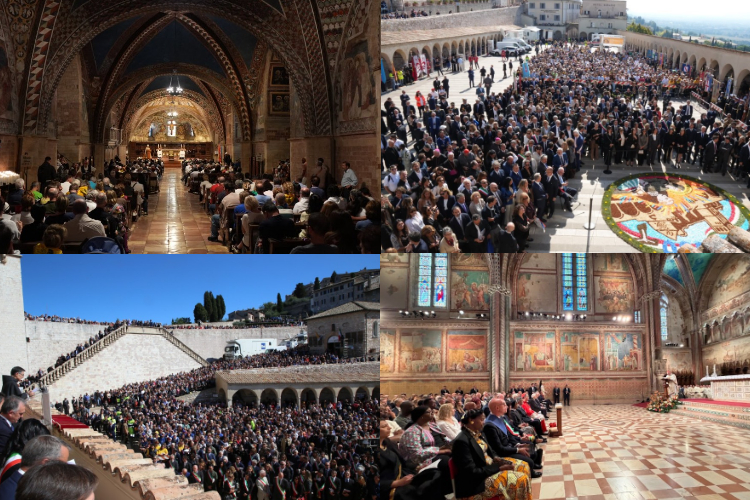
Italy honours St Francis of Assisi 800 years after his death, celebrating a saint whose devotion to Christ, radical simplicity and message of peace continue to shape generations.
7 October 2026
1.5 MINS
Across the Middle East, North Africa and Anatolia, Christianity once shaped entire civilisations. Could Britain’s Christian heritage likewise become a memory rather than a reality?
7 October 2026
6 MINS
What can Tucker Carlson’s interview with Jacob Rees-Mogg teach us about political disagreement? Their clash over war, Russia and national defence highlights the importance of listening carefully and understanding an opponent’s position before attempting to refute it.
7 October 2026
8.5 MINS
Gerald McDermott’s work challenges Christians to approach Israel through Scripture first, exploring God’s covenant faithfulness, Christian Zionism, Jewish identity and antisemitism.
6 October 2026
3.4 MINS
Christians cannot afford to let headlines and social media shape their view of Israel. Scripture provides a foundation for understanding Israel, God’s promises and our response.
6 October 2026
6.7 MINS
Fresh revelations about the foiled FlyDubai terror plot expose the attacker’s alleged extremist history, while a courageous pilot’s actions prevented an unthinkable catastrophe.
6 October 2026
6.2 MINS
Britain’s grooming gang scandal exposes a devastating failure to protect vulnerable children, raising urgent questions about political correctness, accountability, immigration and the loss of moral courage.



Great article Jonathon. It’s so good to read the work of those who simply say it like it is.
Thank you.