



Pat Dodson on euthanasia bill: Aboriginal people need less death, not more
Labor senator and the father of Aboriginal reconciliation, Pat Dodson, has voiced his serious concerns about the voluntary assisted dying bill likely to pass WA’s parliament.
In a passionate plea, the First Nations leader put pen to paper, declaring “Aboriginal people do not need a new avenue to death” in Saturday’s Weekend Australian. He is the first major Labor figure to speak out against the bill.
His criticism echoes that surrounding other recent pro-death bills put through our nation’s parliaments: it was too rushed, and didn’t allow for enough consultation. From Dodson’s article:
“There are significant deficiencies in this bill and the process that has led to it. Consultations with First Nations have not been conducted well; stakeholder submissions were not made to an exposure draft of the bill.”
Adding to this, Dodson remarked, “That’s not a way to really consult with First Nations people on a complicated issue like this.” But he had other concerns too.
It ignores First Nations understandings of civil society
In Australia, issues like euthanasia are often debated in the framework of individual rights. But according to Dodson,
“Such a perspective emphasises the rights of an individual and ignores the wider influence of such decisions on those around them—families, friends and communities.”
He labels this a failure to recognise Aboriginal ideas on civil society. Sanctity of life, he says,
“has much resonance with our perspectives and First Nations have respected it. Now, with little education or explanation we are confused as to why a change is necessary.”
Dodson explains that
“Aboriginal people’s unique conception of life and death, their holistic understanding of health, and their fundamentally collectivist nature is part of their concept of civil society.”
In other words, if Aboriginal perspectives are going to be considered in public debate, we have to move beyond the “my body, my right” rhetoric that sanctity-of-life issues are often reduced to.
It adds to First Nations fears of whitefella medicine
Pat Dodson also believes that legalised euthanasia will add to the fear already felt by many Aboriginal people towards ‘whitefella’ medicine:
“People are very suspicious of the whole (health) system generally. If they find it is associated with potentially the capacity to end your life, as much as to save it, I am fearful people will then—despite their need—start to move away.”
In making his warning, he indicated that this was the experience of Aboriginal people when the Northern Territory legalised euthanasia from 1995-97.
It opens another avenue of death for First Nations people
The senator’s most powerful case against legalised euthanasia was that it only adds to an already-long list of obstacles to the longevity of Indigenous Australians:
“First Australians live shorter lives. Their babies are likelier to die of preventable diseases. They watch their friends, cousins and siblings prematurely end their own lives. They have had their hearts broken too often when there is a “death in custody” because of misjudgment, prejudice or ignorance as their culture faces power and authority.
“One simply cannot bear witness to this reality—where First Nations are overrepresented at every stage of our health and criminal justice systems—and put forward another avenue to death. As representatives and legislators, surely we must be focusing our attention on enacting laws that help prolong life and restore the right to enjoy a healthy life.”
In making his point, Dodson quoted the UN Declaration on the Rights of Indigenous Peoples, article 24.2, which states:
“Indigenous individuals have an equal right to the enjoyment of the highest attainable standard of physical and mental health. States shall take the necessary steps with a view to achieving progressively the full realisation of this right.”
Pat Dodson is right when he says that this legislation is a step in the wrong direction.
“I urge all West Australian parliamentarians to consider the importance of the decision before them. This cannot be business as usual.”
Last month, the legislation passed in the lower house by 44 votes to 12. The vote is expected to be tighter in the Legislative Council.
If you live in WA, make sure you contact your senators. Family Voice have made the process easy at this link.
Recent Articles:
18 October 2026
2.7 MINS
Every season of life belongs to Christ, and we don't retire from discipleship as we grow older. In fact, our older years hold unique gifts for the younger generations.
17 October 2026
3.4 MINS
Seeking the face of God means surrender, laying aside our agenda and wants. Revival begins when we want God himself more than we want the outcome.

16 October 2026
4 MINS
A desperate Victorian Labor Party is peddling taxpayer-funded abortions as free “healthcare”. In a shameless attempt to stay in power, they're willing to do anything — including killing the unborn and forcing taxpayers to pay for it.
16 October 2026
3.4 MINS
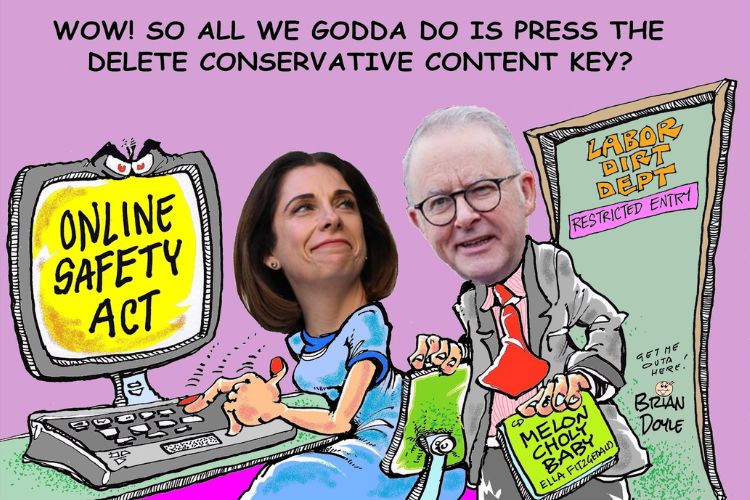
Australia’s proposed digital duty of care laws promise greater online safety and increased user control by switching off algorithms, but critics warn they could give ministers sweeping powers to restrict lawful content and threaten free speech.
16 October 2026
2.6 MINS
Euthanasia accounted for 4% of all deaths in Belgium in 2025, with growing numbers involving people who were not terminally ill, dementia patients and psychiatric conditions.
16 October 2026
3.3 MINS
Jesus is calling us to love one another “just as I have loved you”. And if the Church does awaken to that agape (love), the world will see a great and powerful witness to Christ and his kingdom.

15 October 2026
4.2 MINS
Many Australian Christians don’t know a single Aboriginal person. Robyn Murray argues that reconciliation begins with honest history, prayer and a shared life in Christ.


