



PC language is a tool to unravel our social fabric
By Kevin Donnelly, The Australian
Illustration: Johannes Leak.
Editor’s Note: Kevin Donnelly deftly exposes the dangers of contemporary culture’s increasing forcefulness in policing language, demanding conformity to warped ideologies that distort the very fabric of our society. This unhealthy practice, with its roots in Marxist theory, has infiltrated our institutions of higher education, curtailing freedom of academic thought and debate. Yet, we can take heart in ordinary Australians pushing back against the tide, standing up for their basic freedoms at the ballot box.
Support quality journalism and subscribe to The Australian here.
___
Political correctness is an insidious and poisonous form of groupthink and language control, dedicated to forcing a radical cultural-left ideology on schools, universities, media, church and families.
Much like George Orwell’s dystopian novel Nineteen Eighty-Four, free expression and open debate are replaced by Big Brother and Newspeak, where anyone who disagrees or thinks independently is guilty of a “thoughtcrime” and punished and silenced as a result.
Political correctness perfectly illustrates Orwell’s observation, based on his knowledge and experience of communism and fascism, that “if thought corrupts language, language can also corrupt thought”.
Defend Western civilisation, and you are a “racist and a “white supremacist”; argue marriage involves a woman and a man generally for the purpose of procreation, and you are “heteronormative” and “homophobic”; suggest not all men are violent and women can be feminine, and you are guilty of “toxic masculinity” and of being “sexist”.
Such is the dominance of PC language that Qantas staff members are instructed that descriptions such as “mum and dad” and pronouns such as “she and he”, “him and her” are no longer acceptable because they might offend LGBTIQ+ people.
The plus sign is now mandatory on the basis that gender and sexuality are fluid and limitless, and it’s impossible to know what might be coming next.
In Victoria, otherwise known as the Venezuela of the Antipodes, government departments spend taxpayers’ money scheduling “They days” where public servants are directed to use only gender-free pronouns and to ensure they are not guilty of “misgendering” or “dead-naming”.
Such has been the success of the cultural-left’s long march through the institutions that the barbarians are no longer at the gate — they have stormed the citadel. Witness more than 100 University of Sydney academics opposed to establishing a Ramsay centre for Western civilisation on the basis it represents a “conservative, culturally essentialist and Eurocentric vision”.
At Sydney University, students are told the purpose of education is to “unlearn” and to “challenge the established (and) demolish social norms” in areas such as same-sex marriage, indigenous land rights, peace studies, refugees and the environment. Eminent Sinologist Pierre Ryckmans, who taught at the Australian National University, argued that universities had long since abandoned any commitment to a liberal education and what TS Eliot described as “the preservation of learning, for the pursuit of truth, and in so far as men are capable of it, attainment of wisdom”.
For those arguing political correctness is simply about being civil and polite, look no further than its origins and motivating force. Academics including Max Horkheimer, Theodor W. Adorno, Erich Fromm and Herbert Marcuse associated with the Frankfurt School established in Germany during the 1920s realised that workers in the West would never rebel. As British Conservative politician Michael Gove explains in his book Celsius 7/7: “The thinkers of the Frankfurt School revised Marxism as primarily a cultural rather than an economic movement. In place of anger at traditional capitalism, scorn was directed at the reigning values of the West.”
Italian academic Augusto Del Noce makes a similar point, arguing that “it is clear that what today is called the left fights less and less in terms of class warfare and more and more in terms of ‘warfare against repression’”. Del Noce notes the rise of an extreme form of secularism dedicated to destroying Christianity.
One of the most significant theories associated with the Frankfurt School is critical theory, defined by the Stanford Encyclopedia of Philosophy as a liberating and emancipatory philosophy directed at “decreasing domination and increasing freedom in all its forms”.
Whether freeing those oppressed by capitalism, racism, sexism or a heteronormative, binary sense of gender and sexuality, the purpose of critical theory is to overthrow the status quo and to initiate a period of equality and freedom for all. It is also vital to realise that, as classical Marxism was replaced by neo-Marxism as a result of the Cultural Revolution of the late 1960s, the concept of critical theory morphed into a rainbow alliance of radical, cultural-left narratives including deconstructionism, postmodernism, postcolonialism and radical feminist and gender and sexuality theories.
What’s to be done?
As I suggest in A Politically Correct Dictionary and Guide, even though political correctness is rampant — proved by the fate of The Australian’s Bill Leak, who was attacked and vilified for pointing out an essential truth about isolated Aboriginal communities — not all is lost.
This year’s federal election result, and the fact the quiet Australians voted for a conservative government and an avowed Christian prime minister, suggest the tide might be turning. Add also that the ALP’s review of the election result identifies the Christian vote as important.
Australians are increasingly concerned that religious freedom and freedom of expression are under attack, and that political correctness represents a hostile, unacceptable threat to our way of life.
It should not surprise that in a recent ABC survey titled Australia Talks, 68 per cent agreed PC had gone too far, with 52 per cent identifying as ALP voters.
The work of think tanks such as the Centre for Independent Studies, the Mannkal Foundation and the Institute of Public Affairs also suggests the battle of ideas is not completely lost, and that the flame of liberty still burns.
___
Kevin Donnelly is a senior research fellow at the Australian Catholic University and author of A Politically Correct Dictionary and Guide (available at kevindonnelly.com.au). He appeared on Peta Credlin, Sky News, on Friday.
Recent Articles:
24 October 2026
3.3 MINS
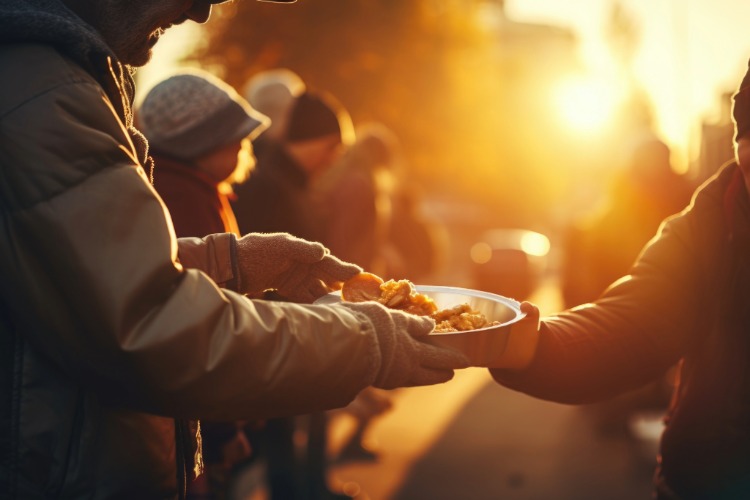
When we ask God, "What is in my hand?", and see our possessions, money and time as seed that God asks us to sow, life becomes simpler.
23 October 2026
6.8 MINS
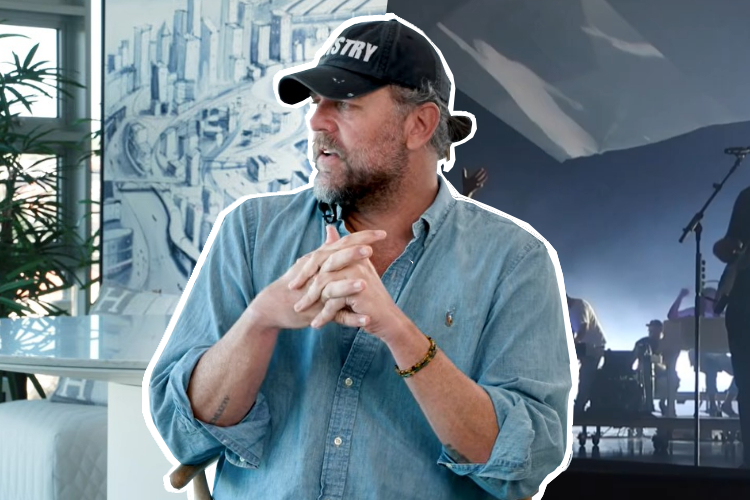
Hillsong UNITED’s Joel Houston reflects on fame, faith and the burden of ministry, questioning performative Christianity as he seeks a more authentic walk with God.
23 October 2026
13.1 MINS
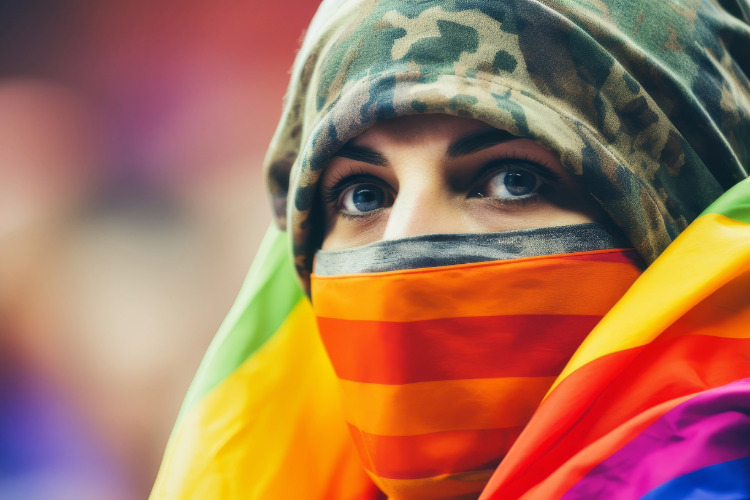
Tasmania’s proposed conversion practices legislation raises serious questions about religious freedom, pastoral care and whether Christians can freely pray with those seeking to live according to their faith.
23 October 2026
7.7 MINS
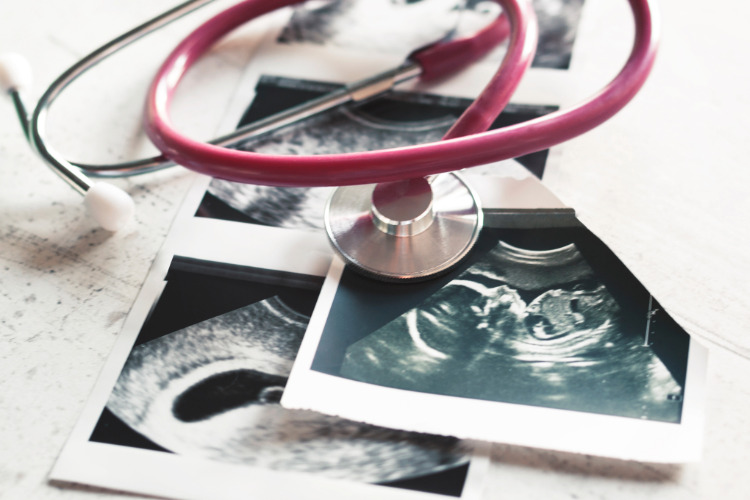
Melbourne Catholic Archbishop Peter Comensoli has spoken out clearly against the deadly promises by both major parties in Victoria ahead of the election, drawing a comparison between abortion and capital punishment.
23 October 2026
3.1 MINS
As Western societies grow more hostile, could abandoning Christianity’s moral foundations be contributing to the rise of ideological extremism, political intolerance and violence?
23 October 2026
5.1 MINS
France’s escalating riots expose the dangers of political extremism, antisemitism and radical alliances, offering America a stark warning about the future of Western democracy.
23 October 2026
3.1 MINS
The one who is worthy of it all is awakening his Church to be captivated by him, so that we will honour one another and share his gospel with humility and courage.


