



Getting Back To What Made Us Great
As the West continues to decline, what will it take to turn things around?
As the days grow ever darker in the West, the battles are intensifying. And they are being fought on every level: the political, the cultural, the social, the legislative, the ideological, and so on. But of course the Christian understands that the main battleground occurs on the spiritual level.
In one sense the spiritual war is the most important. However, we also know that these spiritual battles manifest themselves in all the other arenas. So political battles are not just political. Ideological battles are not just ideological. All of them are connected to the much bigger spiritual fights raging all around us.
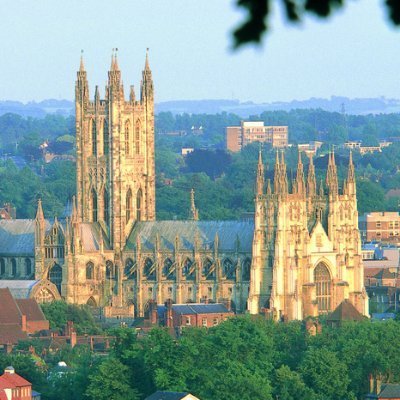
But he would be equally foolish to put everything into a legislative battle or a political fight without realising the spiritual war that undergirds all this. The effective Christian witness and the effective Christian culture warrior is one who takes seriously all levels of the war, and fights on all levels.
Think of someone like Wilberforce who worked for decades in the political and legislative arenas to fight things like slavery and other social ills. But he and his team were equally involved in prayer and the spiritual battles. Both were needed to make a difference, and what a difference they made.
But as I said initially, the days really are getting darker, and things really are getting worse and worse. There may well come a time soon when believers cannot be involved in the social and political battles, and prayer and evangelism will be our only weapons left. And even the freedom to evangelise may soon be taken away from us.
I say all this because of three recent public figures who have spoken about the need for a resurgence of public faith to turn around the West’s demise. One was a more generic call for a return to religion made by someone who may not be a Christian; the second was a specific call for a return to Christianity by someone who is a Christian; and the third was a defence of the Christian faith and its achievements from a sceptic.
The first one is American conservative political scientist and author Charles Murray. He has penned a number of significant volumes over the years, including his important 1984 book, Losing Ground, and his 1988 volume, In Pursuit of Happiness and Good Government.
He was recently interviewed by Jonathan Van Maren. The 49-minute interview is interesting for many things, but what I want to highlight is when Murray speaks about the importance of the loss of religion and the decline of the West. At the 29-minute mark and following this is discussed.
Murray says that secularisation is still an ongoing reality, but some American intellectuals are now seeing the importance of reversing the trend. He notes that if there is no God, then morality cannot really exist. This is a key challenge to secular humanism. And he reminds us that the Founding Fathers knew that without religion the American experiment would fail.
Europe will continue to decline and break down because of its secularism. Indeed, the prospects for the West are looking rather discouraging without a renewal and resurgence of religion. What is needed is a new spiritual awakening, such as those that broke out in the past. If not, the West won’t last and will simply run off the edge of the cliff.
My second public voice calling for a return to religion – specifically, a return to Christianity – comes from a new English politician. Danny Kruger, MP for Devizes in Wiltshire, used his maiden speech to call for a return to Christianity. You can see his 7-minute speech here.
He said that he and his wife had formerly worked at a prisoner rehabilitation charity. In his talk he said that the UK faces many challenges, and that a return to its Christian roots was essential to restore the social structure of the land. He went on to say this in closing:
And even for those who didn’t believe in God, there was a sense that our country is rooted in Christianity, that our liberties derive from the Christian idea of absolute human dignity. And today these ideas are losing their purchase. So we are trying to find a new set of values to guide us, a new language of rights and wrongs, and a new idea of identity, based not on our universal inner value, or on our membership of a common culture, but on our particular differences.
And I state this as neutrally as I can because I know that good people are trying hard to make a better world, and I know that Christianity in the Western past is badly stained by violence and injustice. But I’m not sure we should so casually throw away the inheritance of our culture.
There is so much to be positive about, I share the Prime Minister’s exuberant optimism about the future, but we need a set of values and beliefs to guide us. As we advance at speed into a bewildering world where we are forced to ask the most profound questions about the limits of autonomy and what it means to be human, we may have reasons to look about for the old ways and seek wisdom in the old ideas which are in my view entirely timeless.
My last spokesperson to defend faith in an age of un-faith is the English actor John Rhys-Davies. Perhaps best known for his role as Gimli in The Lord of the Rings trilogy, he has on more than one occasion taken a stand against the spirit of the age. See for example an earlier piece I did on the actor.
And as discussed in a quite recent article, he is still quite unashamed of standing up for the many benefits of Christianity:
“The Lord of the Rings” star made his return to faith-based entertainment recently as a voice in the animated film “Pilgrims Progress” and as the lead in the upcoming movie about the life of Ireland’s patron saint Patrick. He revealed that he often finds himself defending Christianity.
“I count myself a rationalist and a skeptic, and I find myself constantly defending Christians and Christianity,” Rhys-Davies told The Christian Post while on the red carpet at the popular awards show that celebrates faith and family content.
“We seem to forget that Christian civilization has made the world a better place than it ever was,” he continued. The U.K. native said one of Christianity’s greatest “glories, was the abolition of slavery” but maintained that slavery still exists and it makes him mad.
“All the things that we value, the right of free speech, the right of the individual conscience, these evolved in first and second century Roman Christendom, where the individual Christian said, ‘I have a right to believe, what I believe and not what the Emperor tells me.’ From that our whole idea of democracy and the equality that we have has developed,” Rhys-Davies said. “We owe Christianity the greatest debt of thanks that a generation can ever have and to slight it and to dismiss it as being irrelevant is the detritus of rather ill read minds, I think,” he added.
There are many others of course who know of the importance of Christianity, and who recognise that its decline in the West can only mean bad news for our long-term future – even our short-term future. Yes, there is much that we can still do. We can try to elect better politicians, support better parties, promote better policies, and enact better laws.
But at the end of the day without a major renewal of that which made the West great to begin with, all this may be a lost cause. The English commentator Malcolm Muggeridge had the right perspective on this. In his 1980 book, The End of Christendom he put it this way:
“As Christians we know that here we have no continuing city, that crowns roll in the dust and every earthly kingdom must sometime flounder, whereas, with knowledge of a king men did not crown and cannot dethrone, we are citizens of a city man did not build and cannot destroy.”
Yes we must do all we can to be salt and light, to share the Gospel, and to seek to spread righteousness throughout the land. But we know that all human institutions, devices, plans, and purposes will only go so far. Yet I for one am cheered up a bit when I see others making a very public stance for the importance of faith – the Christian faith in particular.
May many more such voices be heard – and heeded – before it is too late.
___
Originally published at CultureWatch.
Photo by Benjamin Davies on Unsplash.
3 Comments
Leave A Comment
Recent Articles:

13 October 2026
2.6 MINS
Allegra Spender’s proposed bill reignites debate over discrimination protections, religious freedom and the right of faith-based schools to uphold their beliefs and values.

13 October 2026
3.9 MINS
Tasmania’s proposed conversion practices law raises serious concerns for churches, parents and faith-based schools, with broad definitions, severe penalties and uncertain protections for religious freedom.
13 October 2026
5.5 MINS
Stephen Baldwin’s journey from drug addiction to sobriety, Christian faith and family life reveals how surrender, daily discipline and renewed hope transformed his life.
13 October 2026
2.8 MINS
The church in Ephesus had so much going for it. Yet despite their hard work, perseverance, endurance, and discernment, there was something deeply wrong: they had left their first love.
12 October 2026
12.9 MINS
God’s judgement can seem difficult to reconcile with His goodness. But Scripture presents God’s perfect justice as something we can celebrate — and His present offer of mercy through Jesus as the good news.

12 October 2026
3.7 MINS
An EU court case over baptismal records could pit data protection laws against religious freedom, raising serious questions about whether governments can compel churches to erase sacramental history.
12 October 2026
3.3 MINS
In the week leading up to Christ’s crucifixion, Jesus' soul was troubled. He responded with a bold prayer, and his example challenges us to that same boldness.



Great article Bill
Thanks Bill, could i suggest visiting a site called Truthxcange set up up by Dr Peter Jones, a Presbyterian minister and author. He suggests that we are entering a post secular age and entering or revisiting old pagan religions and spiritually. Divinity is found within etc classic Hinduism. This is where people are heading especially millennials. Christianity to a lot of people is oppressive, hypocritical, irrelevant, divisive etc etc. So they are looking again to the mythology gods of Rome. Francis Schaefer in his book “How then Shall we Live” said western civilization started in Rome went through various periods throughout history. Here in the 21st century we are back at Rome embcracing its spirituality and philosophy. Peter Jones is an important voice in this day. He has some excellent u tube clips.
Thank you, bill for bring an extremely broad topic into focus.