



Does God Bless Nations?
“And I will make of you a great nation,
and I will bless you and make your name great,
so that you will be a blessing.
I will bless those who bless you,
and him who dishonours you I will curse,
and in you all the families of the earth shall be blessed.”
~ Genesis 12:2-3
So, we are reminded that God does bless nations, and indeed everyone knows that in the USA, God Bless America is a phrase whose ubiquity comes thanks to political speeches and even top sporting events.
But the real question is, what exactly do we mean when we say: “God Bless such and such a Nation?”
In the biblical narrative, Gentile nations were defined around family or blood; the nation of Israel was defined around a covenant. Membership in Israel, with few exceptions (Deuteronomy 23.3), was a biologically open nation in which Gentiles, with receipt of the covenant sign, would become as “natives of the land.”
Question: “Does God truly love all nations (persons)?” Most Christians think the obvious answer to this question is, “Yes, of course He does!” Indeed, many Christians would agree that the very heart of the Gospel is that God so loved the whole world that He gave his Son to make salvation available for every single person.
Interestingly, God Bless America is a patriotic song written by Irving Berlin during World War I in 1918, and revised by him in the run up to World War II in 1938. Irving Berlin arrived in New York at 5 as Israel Baline, the son of a cantor fleeing persecution of the Jews of Russia. Today, God Bless America is often used as a symbol of support for war, sung by soldiers in uniform at baseball games and other events.
Around 1788, the first major world religion to reach Australia was Christianity, lead by the captain of the first fleet, Richard Johnson, and so the presence of Christianity in Australia began with the foundation of a British colony at New South Wales in 1788. The Christian footprint in Australian society and culture remains broad, particularly in areas of social welfare and education provision, and in the marking of festivals such as Easter and Christmas.
Is Australia a Christian or secular nation if the population is still predominantly religious, although the number of people identifying as having no religion is growing? In the 2011 Census, 68.3% of the population had a religion, and 61.1% of Australians identified as Christian.
The 2016 census identified that 52.1% of Australians classify themselves as Christian: 22.6% identifying themselves as Catholic, 13.3% as Anglican and the Uniting Church with 3.7%. Another 8.2% of Australians identify themselves as followers of non-Christian religions. Only 30 per cent of Australians counted in the 2016 census identified as having ‘no religion’. That number had increased from 2011, but more than 60 per cent of Australians still identified with an organised religion.
The Australian Constitution of 1901 protects freedom of religion and the separation of church and state. We note that Section 116 of the Australian Constitution provides that:
The Commonwealth shall not make any law for establishing any religion, or for imposing any religious observance, or for prohibiting the free exercise of any religion, and no religious test shall be required as a qualification for any office or public trust under the Commonwealth.
As a result, the federal government cannot establish a state church. However, the state does interact with religion. For example, the federal government funds schools run by religious organisations and recognises marriages conducted by religious celebrants. The Catholic church is second only to the federal government in providing welfare services.
So, does God bless nations today? What determines whether He will bless Australia or not?
Psalm 33:12 says, “Blessed is the nation whose God is the Lord.”
How can a nation be blessed, you ask? We have previously read that God will bless the nation that has Him as its heritage, but it was conditioned on the nation’s obedience, just as with any nation. However, sometimes God blesses other nations which are less than godly to discipline a nation that is in need of it, such as with Israel.
When the nation of Israel divided into two, separate nations and the Northern Kingdom was known as Israel and the Southern Kingdom, Judah, then God used other nations to take them into captivity. Both nations eventually fell into idolatry, and so God disciplined them so that they would repent and return to Him. That was God’s whole purpose behind these captivities, but eventually the time came when He withdrew His blessings on these other nations and they both were later destroyed by other powers.
Many of the veterans of World War Two believe that God may have used the Allied Forces as His rod of destruction against the fascist regimes of the world.
Although Micah was writing to the nation of Israel, we can see the implications for other nations and people that turn to God and give back to God (Micah 3:1-15), since God “will rebuke the devourer for you, so that it will not destroy the fruits of your soil, and your vine in the field shall not fail to bear, says the Lord of hosts” (Mal 3:11) and “Then all nations will call you blessed, for you will be a land of delight, says the Lord of hosts.” (Mal 3:12) This is the one place that God says, “put Me to the test” (Mal 3:10). The psalmist writes a great conclusion to all this; “Blessed is the people of whom this is true; blessed is the people whose God is the LORD.” (Psalm 144:15)
My hope is that if we say “God Bless Australia”, we would mean that our actions and policies are worthy of God’s blessing because they treat others like children of God, and advance the just and peaceable realm for all. Then it would really mean something.
When I say, “God Bless Australia”, I mean that I pray that God will provide the citizens and politicians of our country with wisdom sufficient for our many challenges. I pray that God will enable Liberals and Labor to see each other as fellow citizens rather than bitter enemies. I pray that all who live here will carefully steward the part of God’s creation for which we are accountable to God — our home place, our neighbourhood, our bit of earth.
I pray that Australia will be a blessing to the larger world and its neighbours. This is my prayer for Australia. Ut sit.
[Photo by Clément Falize on Unsplash]Recent Articles:

19 October 2026
3 MINS
Paul prayed that we would be awakened to a deeper revelation of the Father and who we are in Christ, so that we will make Jesus known to others more passionately.
18 October 2026
2.7 MINS
Every season of life belongs to Christ, and we don't retire from discipleship as we grow older. In fact, our older years hold unique gifts for the younger generations.
17 October 2026
3.4 MINS
Seeking the face of God means surrender, laying aside our agenda and wants. Revival begins when we want God himself more than we want the outcome.

16 October 2026
4 MINS
A desperate Victorian Labor Party is peddling taxpayer-funded abortions as free “healthcare”. In a shameless attempt to stay in power, they're willing to do anything — including killing the unborn and forcing taxpayers to pay for it.

16 October 2026
3.4 MINS
Australia’s proposed digital duty of care laws promise greater online safety and increased user control by switching off algorithms, but critics warn they could give ministers sweeping powers to restrict lawful content and threaten free speech.
16 October 2026
3.3 MINS
Jesus is calling us to love one another “just as I have loved you”. And if the Church does awaken to that agape (love), the world will see a great and powerful witness to Christ and his kingdom.
15 October 2026
3.6 MINS
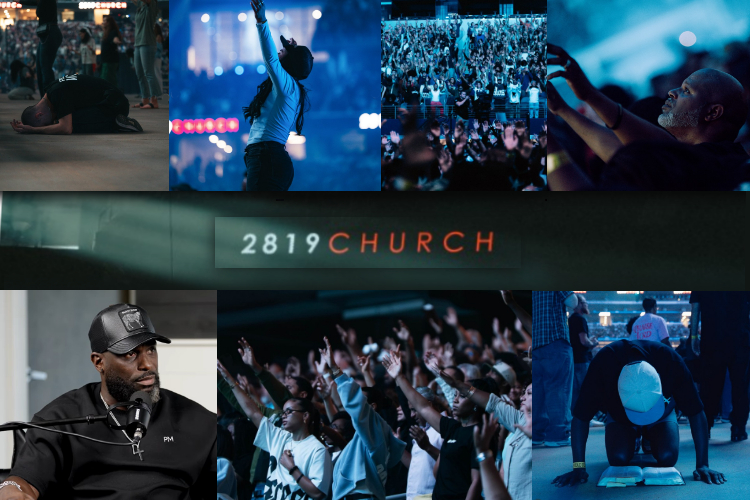
An 80,000-strong gathering in Texas signals a hunger for revival, as Pastor Philip Anthony Mitchell warns that Christian indifference could leave future generations without the faith.


