


‘The Dogma Lives Loudly Within You’: Ruth Bader Ginsburg’s Replacement
The legendary US Supreme Court Justice Ruth Bader Ginsburg passed away on the 18th of September.
This has opened a vacancy on the Supreme Court, and so President Trump nominated a US Federal Judge, Amy Coney Barrett, to fill the empty chair.
While Ginsburg was a secular progressive (with views to match), Barrett is a devout Catholic, with conservative views on issues such as abortion, religious freedom, and LGBTI rights. Unsurprisingly, many secular progressives are terrified: the Supreme court has an increasingly larger say in the cultural battles of our day, and a conservative majority would lean it – and therefore the US – in a conservative direction.
But one prominent Democratic Senator had gone even further, questioning Barrett’s suitability to be a Judge at all.
A 2017 clip from Ms Barrett’s nomination hearing for an earlier Judicial position involves Democrat Senator Dianne Feinstein raising concerns over Barrett’s suitability to be a Judge because of her devout catholic beliefs.
In the clip, Senator Feinstein tells Barrett:
I think in your case… when you read your speeches, the conclusion one draws is that the Dogma lives loudly within you.
Feinstein continues:
And that’s of concern when you come to big issues that large numbers of people have fought for, for years in this country.
In other words, Barrett would not make a suitable judge because of her Catholic beliefs, which are at odds with the ‘big issues’ that secular progressives hold to. Feinstein’s comments (delivered in a Star Wars-esque way) epitomise a common secular blindspot when it comes to religion and the public square.
This blindspot is as follows:
1) To the Secular Mind, Secular Views Are Neutral and Reason-Based
Whereas religious views are based on arbitrary and unprovable beliefs.
According to many secular-minded commentators, secular views are reasonable, while religious views are (often) not. Secular views are ‘neutral’, and self-evident to any reasonable person, whereas religious views don’t make to sense to non-religious people.
With this in mind, secular thinking is the only form of thinking that should be allowed in the public square, whereas religious thinking should be relegated to the private sphere – namely homes and religious institutions.
For such religious thinking, as declared by Feinstein, is a threat to the ‘big issues that large numbers of people have fought for.’
But this secular/religious distinction is an artificial divide.
For it’s not just formally religious people like Barrett who hold to religious beliefs that are unprovable by reason alone. Even the views of the staunchest secularist views are based on unprovable beliefs:
2) It’s Not just Catholics like Barrett that have Religious Views
Even secular views are ‘religious’.
Let’s take the example of Ruth Bader Ginsburg. She’s an icon of the secular Left for her advocacy of abortion rights (among other issues). As she declared a little while ago,
My idea of [abortion] choice [is] a woman’s right to control her own destiny, to be able to make choices [about her body] without a Big Brother state telling her what she can and cannot do.
Think about that for a moment. RBG was pro-abortion because of her view that a woman should be able to do with her body what she wanted, without government interference.
The only way to come to this view is to decide that human autonomy — in this case a pregnant woman’s choice to abort her unborn baby — is more important than anything else — even the life of her unborn baby.
Is such a view self-evident? Is it obvious that an unborn baby only has dignity and worth if the mother chooses to keep it? Is it obvious that human choice gets to decide whether a baby is a person, or not?
Such a view of the God-like power of human ‘choice’ — bestowing dignity or removing it from the unborn — is hardly self-evident.
Rather, it’s based on a belief about the value of human choice. In other words, it’s a dogmatic view. To paraphrase Feinstein, RBG advocated for abortion because the dogma of abortion lived loudly within her.[1]
3) Secularists Exclude Certain Formal Religious Views from the Public Square
While privileging their own ‘religious’ beliefs.
And so we move from a secular blindspot to a more problematic secular practice: the excluding of many religious voices from the public square.
Stephen L. Carter of Yale University has this to say about this secular tendency of excluding religious voices:
Efforts to craft a public square from which religious conversation is absent, no matter how thoughtfully worked out, will always in the end say to those of organised religions that they alone, unlike everybody else, must enter public dialogue only after leaving behind that part of themselves that they may consider the most vital.’[2]
But if all our moral views are based on a bedrock of ‘religion’ — formal or informal — then for secular progressives to exclude religious voices from public is not only unjust, it’s hypocritical.
Look Beyond The Secular Ploy
Christians do well to point out the inconsistency of secular people that wish to silence religious voices in public. Not merely because it’s inconsistent (and therefore unjust). But also because when Christian voices are silenced, there are consequences for society: it’s often the most vulnerable that suffer. Just like the aborted unborn.
___
[1] And the same could be said about every other moral issue: from human rights to marriage; from religious freedom to the death penalty. Every moral position is based on a bedrock of belief.
[2] Stephen L. Carter, The Dissent of the Governed (Harvard University Press, 1999), 90. Quoted in Tim Keller, The Reason For God – Belief in an Age of Scepticism (London: Hodder & Stoughton, 2009), 14-15.
___
Originally published at AkosBalogh.com
Recent Articles:

27 October 2026
3.1 MINS
As the disciples discovered through a huge haul of fish, we can trust Jesus for a net-breaking, boat-sinking catch of people.
26 October 2026
2.5 MINS
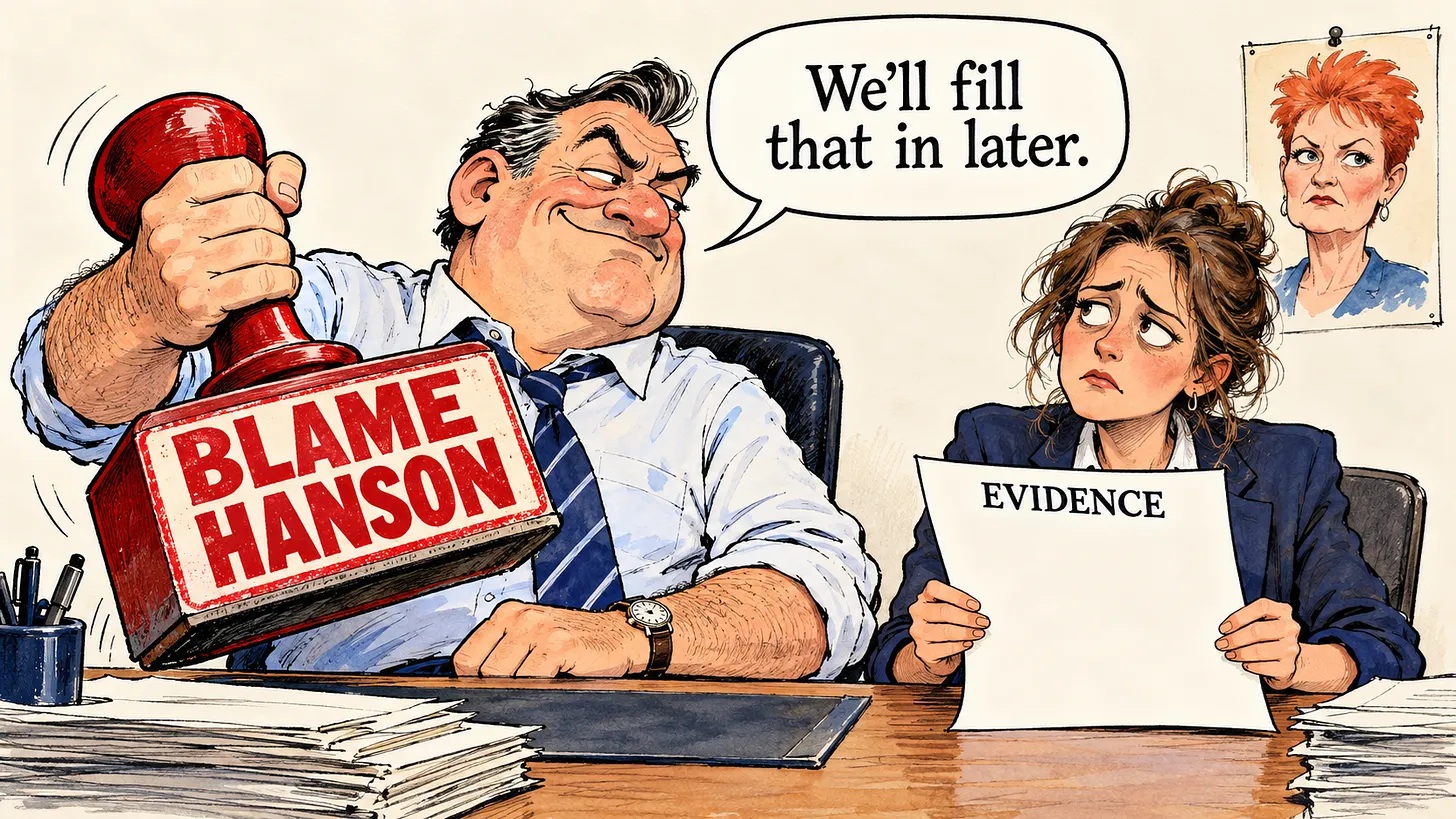
Nation First exposes the rush to weaponise the Haines attack against Pauline Hanson, conservative voices and men before investigators established a motive.
26 October 2026
3.2 MINS
Following Paul's example in Ephesians 1, let us pray for the Father to open the eyes of our hearts so that we may grasp the hope of his calling, the riches of his glorious inheritance in the saints, and the greatness of his power towards us who believe.
25 October 2026
4 MINS
Prayer is active partnership with God, and he is awakening his body to prayer, not by might or by power, but by his Spirit.

24 October 2026
3.3 MINS
When we ask God, "What is in my hand?", and see our possessions, money and time as seed that God asks us to sow, life becomes simpler.
23 October 2026
6.8 MINS
Hillsong UNITED’s Joel Houston reflects on fame, faith and the burden of ministry, questioning performative Christianity as he seeks a more authentic walk with God.
23 October 2026
13.1 MINS
Tasmania’s proposed conversion practices legislation raises serious questions about religious freedom, pastoral care and whether Christians can freely pray with those seeking to live according to their faith.


