



Five Churches Torched in Canada, Statues Toppled as Nation Celebrates Canada Day
Vandals have targeted at least 20 Canadian churches in recent weeks, burning five of them to the ground, as a wave of anti-Christian violence sweeps Canada. Most of the churches to suffer damage have been Catholic, and many are located on First Nations land.
Attacks have taken place in almost half of Canada’s provinces and territories, including Alberta, British Columbia, Ontario, Nova Scotia, Manitoba and the Northwest Territories.
Coinciding with the celebration of Canada Day last Thursday, several statues have also been toppled, including monuments to Captain Cook, Queen Victoria, and the reigning monarch Queen Elizabeth II.
Police believe the church attacks are likely linked to recent alleged discoveries of unmarked graves at former religious boarding school sites where First Nations people were educated. Since May, over a thousand suspected graves have been identified across three sites in British Columbia and Saskatchewan.
The boarding schools were run by religious groups from the 1840s to the 1960s, after which time they were taken over by Canada’s now-defunct residential school system. The last one closed in 1996.
In many cases, First Nations children were removed from their communities and forced to cut ties with their families and their cultures. Some suffered physical and sexual abuse. There were known to be high rates of student mortality among these First Nations children, which may explain the existence of these gravesites.
Another church in Canada was vandalized on Canada Day.
St. Jude's Parish was vandalized in Vancouver, BC on the night of July 1.
The suspects were videoed throwing orange paint all over the exterior of the church.pic.twitter.com/EQ9H53jEp7
— Marie Oakes (@TheMarieOakes) July 3, 2021
While many of the churches targeted in Canada in recent weeks suffered arson attacks, others were defaced with paint, had windows broken, or sacred statues vandalised. Eleven such attacks took place in Calgary, Alberta.
Ironically, some of the congregations affected have Indigenous Canadians in their membership. Others are made up predominantly of migrant Canadians, who fled lands where they formerly faced persecution.
Alberta’s Premier Jason Kenney took to Twitter to condemn the attacks in his province.
The vandalism of Churches across Alberta is appalling.
This happened today at an African Evangelical Church in Calgary. The congregation is made up entirely of new Canadians, many of whom came here as refugees fleeing countries where Churches are often vandalized & burned down. pic.twitter.com/o9mGPLD7QO
— Jason Kenney (@jkenney) July 1, 2021
In a follow-up tweet, Kenney denounced the woke ideology apparently behind the attacks. “This is where hatred based on collective guilt for historic injustices leads us. Let’s seek unity, respect and reconciliation instead,” he wrote.
Catholics are among those upset with the Church’s role in the treatment of First Nations people. LifeSiteNews interviewed a Toronto local, Teresa Buonafede, who explained,
We are upset at the neglect that happened at all residential schools and the disregard for the bodies of those First Nation children… If Toronto and other areas can afford obscenely costly cathedrals and renovations, surely we can give more to the First Nations.
But Buonafede added that the targeting of churches in the present day is counterproductive, and she highlighted the media’s role in fomenting anti-Christian sentiment. “People are upset and angry and the media is placing the blame, almost exclusively, with the Catholic Church,” she explained.
Canadian activists and academics (but I repeat myself) having a very normal one about systematic arson of Catholic Churches pic.twitter.com/3F8aVNGGHD
— Adrian Vermeule (@Vermeullarmine) July 4, 2021
Canadian journalist Lauren Southern has been documenting these church attacks. She has expressed puzzlement, asking why vandals would target churches on Indigenous land where First Nations Canadians worship, conduct charity and are employed on staff. Some of them “may even be the descendants of residential school victims,” she remarked.
Said Southern, “I cannot imagine how burning down their place of worship is going to bring them truth and reconciliation.”
Dr Scott Hamilton, a professor in the Department of Anthropology at Lakehead University in Thunder Bay, worked from 2013-15 identifying gravesites of residential schools across Canada. His full report is available here. In an interview with The B.C. Catholic, these facts came to light:
Hamilton said the “mass grave” description “misses the point with the Residential-School story,” a story that unfolded over more than a century and in which appalling conditions led to high death rates due to disease, the most devastating of which was tuberculosis.
Deceased students were often buried in simple graveyards near the schools because federal authorities provided no funding to send the bodies home or to conduct proper burials. The result, Hamilton told The B.C. Catholic, was that the children were interred in de facto “pauper’s graves” with simple wooden crosses that have deteriorated and disappeared over the decades. His report found no evidence that school officials intended to hide the graves…
He also wrote that, in some areas, it is likely that the remains of teachers and their own children, nuns, and priests will also be found in school-related cemeteries.
In addition, Dr Hamilton noted:
Tuberculosis was not the only epidemic during these years, there were others, such as the devastating Spanish flu in 1918. There were no inoculations available to stem the deaths. Neither were anti-bacterial drugs such as penicillin and anti-viral and anti-inflammatory drugs available at that time. It is significant that by 1948, the death rate of Indigenous children in the schools had substantially decreased. Prior to 1948, student illness or death was high and the subsequent lower death rate can be attributed to medical developments.
In his report on burials associated with Indian Residential Schools, anthropologist Dr. Scott Hamilton discovered that not only did the federal government fail to develop a policy on how deceased students should be buried (other than to instruct school officials to spend as little as possible), but Ottawa also produced no plan for the maintenance of cemeteries after the schools closed.
The federal government had signed 11 treaties, assuming responsibility
.
Just as with the uproar over the ‘Magdalene Laundries‘ in Ireland, the current furor over the residential schools of Canada appears to be largely due to media manipulation fomenting anti-Christian sentiment, while ignoring the role of the state in perpetuating horrible living conditions and breaking up families.
[Photos: CBC; The Star; Global News]Recent Articles:
12 October 2026
3.3 MINS
In the week leading up to Christ’s crucifixion, Jesus' soul was troubled. He responded with a bold prayer, and his example challenges us to that same boldness.
11 October 2026
2.6 MINS
Jesus offers us intimate friendship, which produces great joy as we walk closely with him.
10 October 2026
4.1 MINS
When Jesus rebuked the Laodicean church, this was not a sign of his lack of love, but proof of it and how greatly he longs to reward and bless us. He is knocking — will we answer?
9 October 2026
1.3 MINS
Season 6 of The Chosen is releasing next month, and until 15 November, your church has the opportunity to host a free pre-release screening of Episode 1. Here's how.
9 October 2026
2.9 MINS
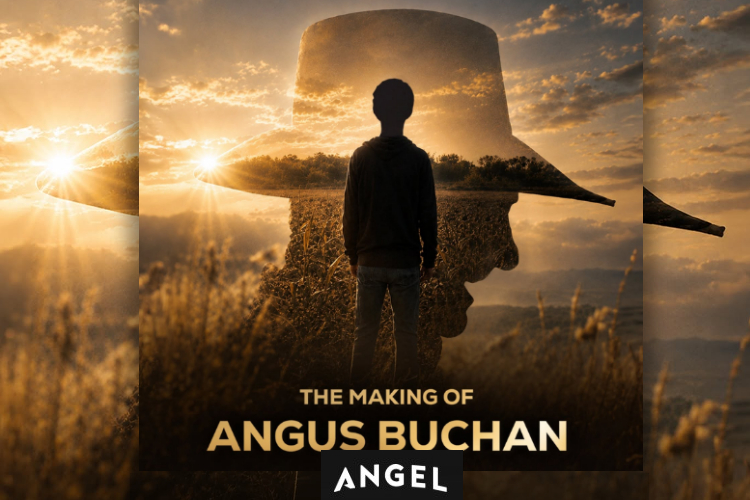
Angus Buchan’s remarkable journey from farmer to evangelist is brought to life in a new documentary now streaming, revealing the faith, family and challenges behind his public ministry.

9 October 2026
3.3 MINS
New South Wales healthcare workers who object to abortion and voluntary assisted dying face growing pressure, raising serious questions about conscience rights, employment and moral injury.
9 October 2026
2.9 MINS
God is intensely relational, and he puts us into a community of believers so we can use our gifts in service of Christ's body.


