



Thinking Sensibly About Covid, Death and Dying
Some rational thinking on diseases and death:
Taxes and death are certainties, as we are always told. They are an inescapable part of life. Every day people all around the world die for a host of reasons. Thankfully over the centuries, we have helped people to live longer and healthier lives, but at the end of the day, the mortality rates remain exactly the same.
Sensible Risks vs Paralysing Fear
 Life is always about risks, and life is always about trade-offs. As I wrote in my chapter in Fundamental Rights in the Age of COVID-19 edited by Augusto Zimmermann and Joshua Forrester (Connor Court 2020):
Life is risky. Every time we step outside, we risk possible death: We might get hit by a truck; a tree might fall on us; we might get struck by lightning; someone might take us out in a drive-by shooting. Sure, some of these risks may be much less likely than others, but life is inherently risky. The question is, what risks are we willing to live with?
Taking the car to work which might result in a person getting in an accident is seen as a necessary risk in order to earn money to feed the family. Other risks are more a matter of personal choice. Some folks may love to go rock climbing, but there is always the risk of a fatal fall. One does not have to go rock climbing, but one does need to earn a living…
A wise person will seek to minimise risk — but within reason. If we banned all cars in Australia, we would of course then have zero car accidents and fatalities. But most people would say that the price is far too high to pay for this. So as always, we deal with trade-offs. But there have always been some who seem to think that we must work to eliminate most, if not all, risk — no matter how costly this might be. Some governments seek to do this in various areas. And now with the corona crisis we see more of the same in play.
The cost and benefit assessment is obvious here: On the one hand, we want to keep people safe and keep the virus from spreading. But on the other hand, we also do not want to shut down the nation, utterly destroy the economy, and effectively take away all of our freedoms. Some sort of balance is needed.
How much government intervention is necessary, wise and helpful? How much is too much? How many liberties should we surrender, and for how long? When does the cure become worse than the disease? Yes, some infringements of individual liberties will be needed, and some strict state measures will be necessary — at least for a while. But we also must be concerned about government overreach, statist overkill, overzealous policing, and far too many draconian measures being implemented with far too many freedoms being taken away.
But the Covid virus has greatly skewed our thinking here. Whereas most people until recently were happy to live with risk, as well as recognise their own mortality, the hysteria and fear whipped up by politicians and the media over Covid has resulted in masses of people who are so obsessed with death and dying that they seem happy to stay locked up under house arrest forever if it will ‘keep them safe.’
I and many others refuse to live this way. Indeed, this is not living at all. So fearful are so many about the possibility of dying from this virus that they have given up on living altogether. They have traded facts and freedom for fear and paranoia.
A Balancing Act
With these preliminary considerations in mind, let me draw your attention to two articles which were both published a few days ago on these issues: one in a leftist newspaper and one on a conservative website. Let me first run with the latter. “Death, Covid and Freedom” by Ian Hanke is worth quoting from. He says in part:
Essentially, society must measure the cost of lockdowns, the undermining of civil liberties, and economic ruination versus deaths. According to the Australian Bureau of Statistics in 2019, the last pre-pandemic year, 169,301 Australians died, which was an increase of 10,808 on 2018 — a rise of 6.08%. That is the equivalent of one person dying every three minutes and ten seconds or 463 people per day.
The Doherty Institute has modelled the number of deaths likely to occur over a 180 day period with adult vaccination levels of 50% (8894 deaths), 60% (5294 deaths), 70% (1984 deaths), and at 80% (1291 deaths). If you annualise the data at 50% vaxxed 17,788 people will die; at 60% 10,558; at 70% 3,968; and, at 80% 2582. So what does this reveal?
Well, using deaths per minute:
- At 50% a person will die every 2 minutes and 8 seconds
- At 60% a person will die every 2 minutes and .92 seconds.
- At 70% a person will die every 3 minutes and .03 seconds.
- At 80% a person will die every 3 minutes and .05 seconds.
The difference between opening at 50% v 80% is another death every 0.25 seconds. Opening at 50% compared with the 2019 rate of 3 minutes 10 seconds is a difference of just .30 seconds — not much in the scheme of things. But what of daily deaths?
In 2019 463 people died per day. At a 50% vax rate 512 people will die per day; at 60% 492; at 70% 474; and, at 80% 470. The difference in death rates opening up at 50% versus 80% is 42 people per day. Also even if society was freed at 50% the actual death rate would decline as more people became vaccinated over the course of the year. The figure of 17,788 is actually a hypothetical figure based on a constant 50% vax rate.
My personal view is that if the public were aware of the annual pre-pandemic death rate then our political leaders and chief health officers would be harder pressed to justify the harsh lockdowns they do. I believe people would be prepared to make their own risk assessments and, further, I believe that people would accept a trade-off between an increased death rate and the reopening of society with some sensible measures such as social distancing and masking where appropriate.
People die every day and will continue to do so. It is estimated that 100 billion people on earth have died before us and into the future no doubt another 100 billion will die after us. Governments cannot protect us from death and that has been the folly of the current approach by the federal and state governments. It is simply the culmination of life. And we should not be afraid of it.
By framing their measures to deal with Covid-19 as an issue of “saving lives” as opposed to simply managing a pandemic the politicians and CHOs have atomised society and are doing untold damage to it and individuals and the economy.
Death is the Outcome Either Way
And Dr Rodney Allan, a senior neurosurgeon, wrote this in The Age: “We need to talk about death so we can live with COVID-19.” He writes:
It is not possible to eradicate COVID-19 from the globe, nor is it possible to keep it out of Australia. We need to start talking about the likely outcomes of COVID-19 circulating in the community. We need to start talking about accepting death as an outcome of disease.
As a doctor, I accept death as an outcome every day. I discuss it with patients on a one-on-one basis. I discuss it with their families when treatment is futile, or when I know a patient could have a disease to which they will succumb. Our politicians and health leaders need to start to speak this way to the whole population.
About 1200 people died from influenza in 2017 and people were not especially worried. We did not shut down the economy, nor close schools, nor even institute any of the simple manoeuvres that would probably have prevented many of those deaths (wearing masks, hand washing, and social distancing). It is time our political leaders started to listen to balanced advice.
There is no solution that will not entail deaths. It may be deaths from COVID-19, or deaths of young women who could not access breast cancer screening. Or patients with brain aneurysms that sustain a stroke, or die from the aneurysm rupturing. Or patients with colon cancer who could not access treatment when the disease could have been cured at a younger age. These are just some examples.
I found it confusing to read in the news about three patients in their eighties who died living in a nursing home when on the same day, at a busy teaching hospital in Sydney, I looked after three patients who also died, from intracranial haemorrhage (bleeding in the brain), and these deaths did not reach the news.
COVID-19 needs to be thought of as endemic, and not as a pandemic. It is very likely COVID-19 will lead to a significant increase in deaths — it is not the flu or a common cold. It might be there is a 10 per cent or even 20 per cent increase in the number of deaths per year. Of note, however, is that we had only 37 deaths from influenza last year and none this year, so the outcome may eventually be even.
Are we prepared to accept a trade-off in death from different causes? It would be a significant tragedy if young people who have curable diseases such as cancer or even mental illness succumb to these in years to come because of lockdowns and COVID-19.
I encourage you to read both of their pieces in full. We are greatly in need of getting some sanity and rationality back in this matter of how we deal with the virus. The fear-mongering and panic porn must stop, and it must be replaced by facts, evidence and a healthy dose of common sense.
___
Originally published at CultureWatch.
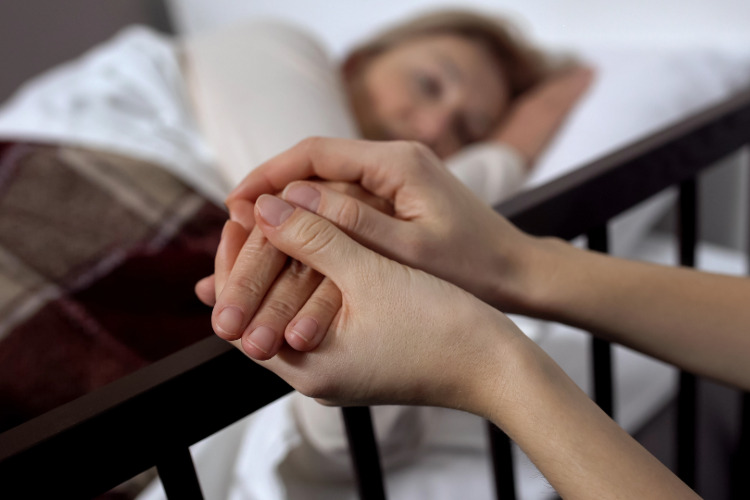
Photo by cottonbro from Pexels.
Recent Articles:
14 October 2026
6.7 MINS
A national poll challenges claims that pro-life Australians are extremists, revealing broad support for abortion restrictions, protections for unborn babies and safeguards for vulnerable women.
14 October 2026
2.8 MINS
Queensland recorded 1,082 assisted suicide and euthanasia deaths in 2025–26, as the review board called for consultation on potentially widening eligibility criteria.
14 October 2026
2.8 MINS
Australia needs a courageous Church that never separates courage from Christian love — the courage of Peter and John, who, when ordered to cease speaking about Jesus, responded: “We can't stop.”
13 October 2026
2.6 MINS
Allegra Spender’s proposed bill reignites debate over discrimination protections, religious freedom and the right of faith-based schools to uphold their beliefs and values.

13 October 2026
3.9 MINS
Tasmania’s proposed conversion practices law raises serious concerns for churches, parents and faith-based schools, with broad definitions, severe penalties and uncertain protections for religious freedom.
13 October 2026
2.1 MINS
Victoria’s assisted dying deaths have surged by 300 per cent since legalisation, while a disturbing case involving a patient’s partner raises urgent questions about safeguards.
13 October 2026
1.8 MINS
Australia faces mounting geopolitical, economic and defence threats, but its political leaders lack the statesmanship, bold vision and decisive communication needed to prepare the nation.


