



When is a Person a Person?
I was recently re-reading the childhood classic, Horton Hears a Who, by Dr. Suess – it was for research – and was struck by what many others have observed before me. And that is the clear and pertinent analogy to the subject at hand. Because the essential question being raised is that of ‘personhood,’ In short, when do we view a person as being truly human?
Dr. C. Ward Kischer, emeritus professor of Cell Biology and Anatomy from the University of Arizona College of Medicine, Tucson, Arizona states that,
“Virtually every human embryologist and every major textbook of Human Embryology states that fertilization marks the beginning of the life of the new individual human being.”
As Georgetown University professor Dr. Dianne Irving explains:
“Scientifically, something very radical occurs between the process of gametogenesis and fertilization–the change from a simple part of one human being (i.e., a sperm) and a simple part of another human being (i.e., an oocyte )– usually referred to as an “ovum” or “egg”), which simply possess “human life,” to a new, genetically unique, newly existing, individual, whole living human being (a single-cell embryonic human zygote). That is, upon fertilization, parts of human beings have actually been transformed into something very different from what they were before; they have been changed into a single, whole human being. During the process of fertilization, the sperm and the oocyte cease to exist as such, and a new human being is produced.”
Obviously, not everyone agrees with her conclusion regarding the personhood of the preborn child and, as Wayne Grudem argues in his book Politics According to the Bible, it is commonly rejected for four main reasons:
First, because a baby couldn’t survive outside their mother’s womb. This seems somewhat arbitrary though, because neither could a child survive on its own after they have been born. In fact, I’m not all that confident that any of my own children would have survived without their mother until they were at least in high school, and even then, their chances would have been only fifty-fifty.
Second, is the issue of birth defects. Even if we immediately put aside Godwin’s Law of invoking a parallel to the Nazis, there is something terribly inhumane about going down this path. I have many friends who have had a child with Down’s Syndrome and there is no doubt at all as to their value, let alone personhood. But let’s take an even more extreme example: if a mother found she was pregnant for the fifth time, with the father suffering syphilis and her four previous children had significant handicaps, would it be advisable to terminate? If you answered yes, then you’ve just aborted Beethoven.
The third argument is that of rape or incest. For a start, it must be acknowledged that this is extremely rare, representing under 1% of all abortions. Following on from that, it should also be recognised that the child conceived under these horrific set of circumstances are themselves a victim. The real question is, does an act of wrongdoing necessarily negate someone else’s right to life? Further, it should be acknowledged that something good (i.e. the birth of a child) can arise out of an initial act of evil.
The fourth and final argument is one that most religious people would agree with, and it is to save the life of the mother. Grudem, notes that this is incredibly rare, accounting for 0.118 per cent of cases in the United States and makes the point that:
“This is significantly different from the other cases, because removing the preborn child from the mother’s body (for example from the Fallopian tube in the case of an ectopic pregnancy) results from directly intending to save the life of the mother, not from directly intending to take the child’s life.”
You probably wouldn’t have heard about this, but the Presbyterian Church of Victoria recently wrote to The Victorian Premier, Daniel Andrews, and the Minister for Health, Jill Hennessy, outlining their “continued concerns and prayers for both mothers and their babes, including our long-standing opposition to abortion as a solution to unwanted or unhealthy babies.”
So, when is a person actually a person? When they’re independent? When they’re healthy? Or only when it’s convenient to have them around? The members of the NSW Upper House would do well to go back and read Dr. Seuss. For there is a proverbial elephant in the room, and his name is Horton. And while it took quite a bit to convince everyone that what he was saying was true, he was nonetheless correct.
“Even though you can’t see them or hear them at all;
A person’s a person, no matter how small.”
Recent Articles:
2 June 2026
4.1 MINS
Governments are rushing to 'deradicalise' those with opposing political values — but when belief runs to the heart, no state program can engineer a change of mind.

2 June 2026
8.4 MINS
LILLI is changing the rules of independent Christian pop in Australia. At just 22, she has released her debut album "Anthropology" on the back of recognition from both Australia's Christian and secular scene, hitting a national #2 on the AMRAP national community radio charts for 'O Philosopher', and a finalist in last year's South Australian Music Awards for the pop category.
2 June 2026
4.5 MINS
In Adelaide, the Deaf community worships fully in Auslan — no sound, no barriers. Discover how one church is making the Gospel visible for all.
2 June 2026
1.6 MINS
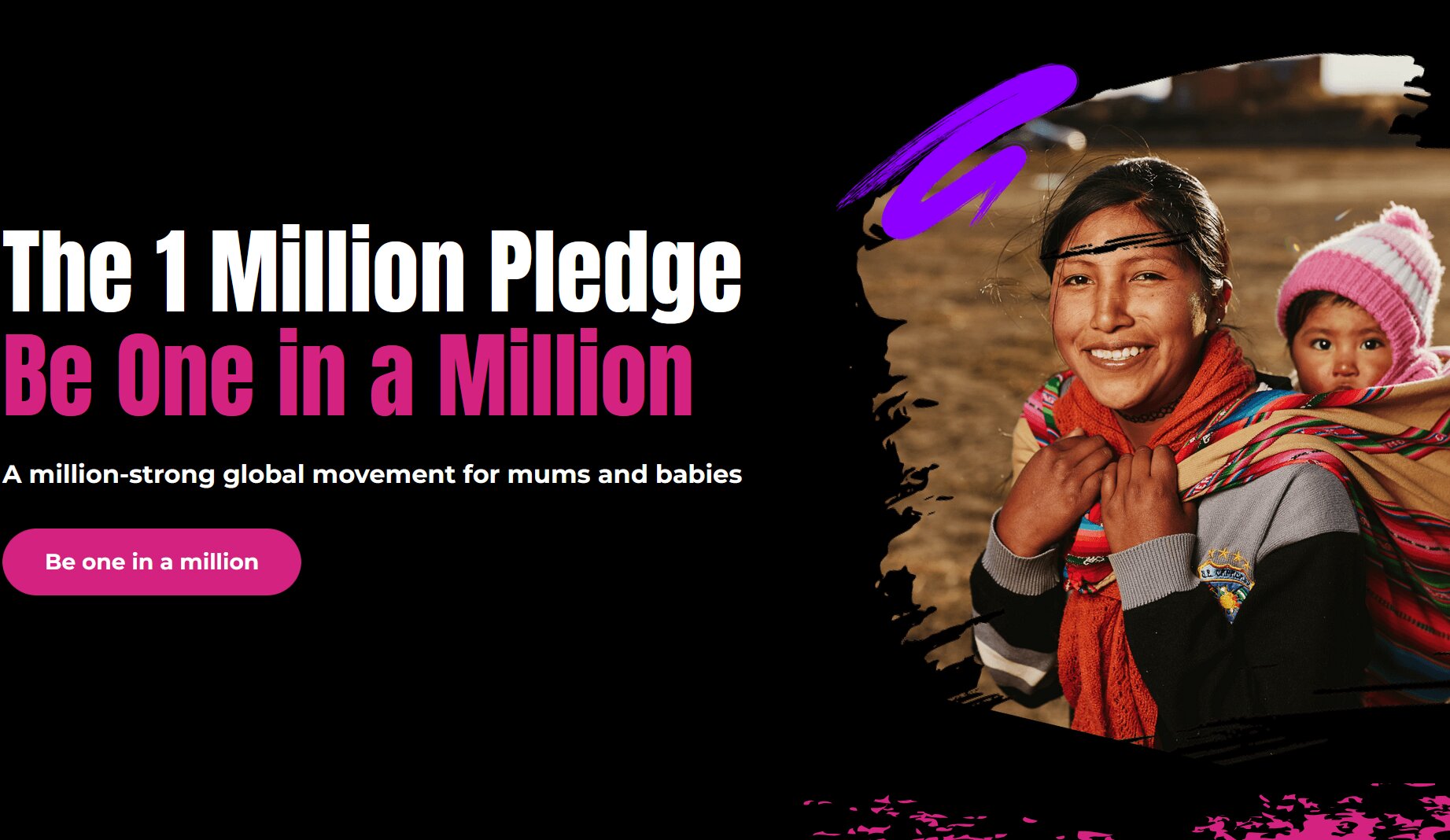
AFL legend Gary Ablett and wife Jordan launch the 1 Million Pledge, uniting Australians to fund life-saving care for mothers and babies worldwide.
1 June 2026
2.5 MINS
The freedom to attend church or sing hymns was never the point. Christianity has always sought to shape culture, transform lives and speak into every aspect of civic life. And that’s precisely the freedom we’re losing in Australia.

1 June 2026
5.6 MINS
One Nation's Sean Bell says Jim Chalmers' fumbling budget defence rivals John Hewson's infamous GST gaffe — and warns housing costs will keep climbing.

1 June 2026
3.3 MINS
Australia's political class is waking up to China's economic warfare — decades too late. The warning signs were there. Why did no one listen?


