



Pro-Life is Pro-Science: Personhood and Biology are Linked
It is commonly claimed that pro-life advocates are anti-science and draw on ‘mere’ religion to advance their perspective. Historian of philosophy Nancy R. Pearcey disagrees: she says personhood and biology are inseparable.
In a 1996 opinion piece in First Things, legal academic Stanley Fish wrote the following:
A pro-life advocate sees abortion as a sin against a God who infuses life at the moment of conception; a pro-choice advocate sees abortion as a decision to be made in accordance with the best scientific opinion as to when the beginning of life, as we know it, occurs.
According to this perspective, science supports “progressive” abortion legislation. In contrast, religion is often the only basis for the pro-life view.
A New Perspective on the Abortion Debate
In a part of her recent book, Saving Leonardo: A Call to Resist the Secular Assault on Mind, Morals and Meaning, worldview scholar Nancy R. Pearcey blows this theory out of the water.
She says that today, “due to advances in genetics and DNA, virtually no ethics denies that the fetus is human: biologically, genetically, scientifically human”. Instead, pro-abortion advocates attempt to deny that being a human, per se, confers moral status on an individual. Hence, one does not have the right to life merely because one is a human.
According to Hans Küng, a liberal Catholic theologian, “a fertilised ovum evidently is human life but is not a person”. Even Peter Singer, a controversial Princeton ethicist, concedes that “the life of a human organism begins at conception”.
Consequently, to maintain their position on abortion, pro-abortionists must look for other criteria that constitute “personhood” rather than “humanness”. In short, being a human does not give one the right to life. Being a person does.
What Constitutes a Person?
Today, bioethicists are struggling to come up with a clear-cut definition of what constitutes a person. When does someone become a person – if not at the moment of conception? What makes one a person – if not the biological reality that one is also a human?
Singer insists that it is “self-awareness” that makes someone a person. Others, like Miranda Sawyer, argue that a fetus becomes a person before birth, at some undefined point:
Once an embryo has developed enough to feel pain, or begin a personality, then … ending that life is wrong.
In contrast, John Harris considers a person someone “capable of valuing its own existence”. Hence, if “they cannot wish to live, they cannot have that wish frustrated by being killed”.
Nonetheless, as Pearcey points out, these “conflicting definitions demonstrate how tricky it is to define personhood once it is cut off from the sheer fact of being biologically human.” This vagueness can also lead to far more sinister opinions on when life worth protecting begins.
For instance, according to Pearcey, James Watson “recommended waiting until after birth and giving a newborn baby three days of genetic testing before deciding whether it should be allowed to live.”
Astonishingly, Singer goes further, considering personhood a ‘gray’ area up to three years after birth. As Pearcey comments, “After all, how much cognitive functioning does a toddler have?”
Pro-Life Equals Pro-Science
These views demonstrate that it is not really pro-lifers who are approaching the question from a subjective, metaphysical perspective. Even Fish had to “eat his words”, according to Pearcey:
Nowadays, it is pro-lifers who make the scientific question of when the beginning of life occurs the key one … pro-choicers want to transform the question into a ‘metaphysical’ or ‘religious’ one.
Pearcey concludes with these chilling words:
Once the concept of personhood is detached from biology, it becomes subjective and arbitrary – opening a door to inhumanity and oppression. Anyone at any stage of life could be demoted to the status of ‘non-person’ and denied the right to live.
Advocates for life need to recognise that science is actually on our side. When human life starts is no longer a controversial question.
Source: Unless otherwise linked, all quotes are from, or cited in, Nancy R. Pearcey, Saving Leonardo: A Call to Resist the Secular Assault on Mind, Morals, & Meaning, Nashville, B&H Publishing Group, 2010, pp. 53-55.
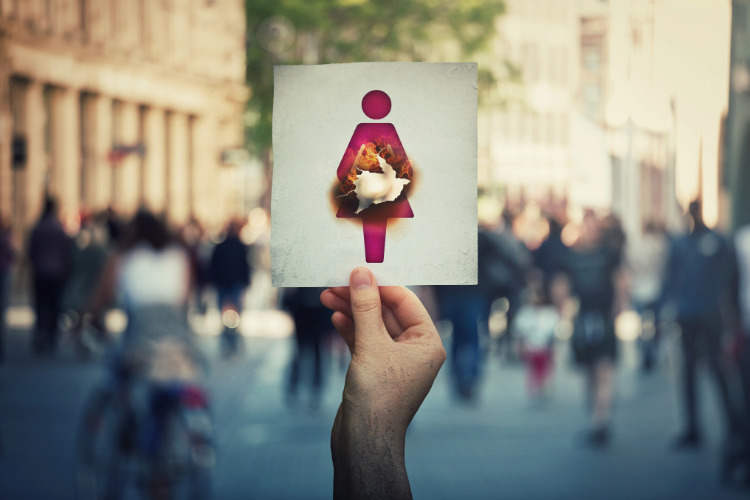
Image by Giang Nguyen on Unsplash.
Recent Articles:
18 October 2026
2.7 MINS
Every season of life belongs to Christ, and we don't retire from discipleship as we grow older. In fact, our older years hold unique gifts for the younger generations.
17 October 2026
3.4 MINS
Seeking the face of God means surrender, laying aside our agenda and wants. Revival begins when we want God himself more than we want the outcome.
16 October 2026
4 MINS
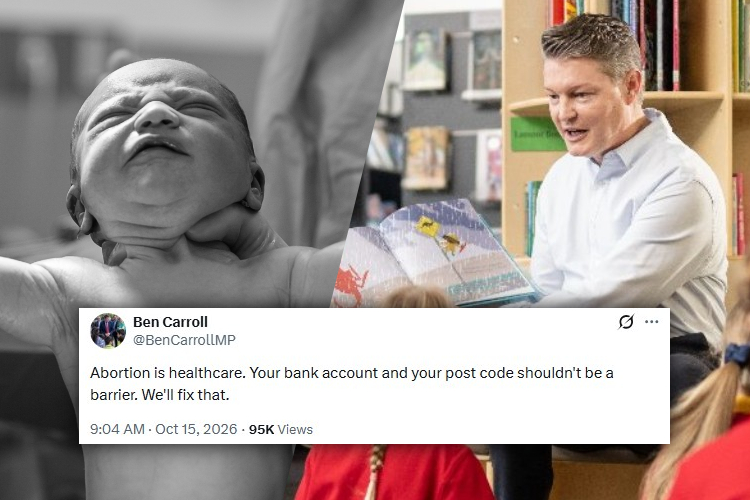
A desperate Victorian Labor Party is peddling taxpayer-funded abortions as free “healthcare”. In a shameless attempt to stay in power, they're willing to do anything — including killing the unborn and forcing taxpayers to pay for it.

16 October 2026
4 MINS
Katie Zacharia’s first days as White House Press Secretary have sparked fierce media criticism, but her remarkable testimony of surviving an abortion attempt tells a deeper story.
16 October 2026
3.4 MINS
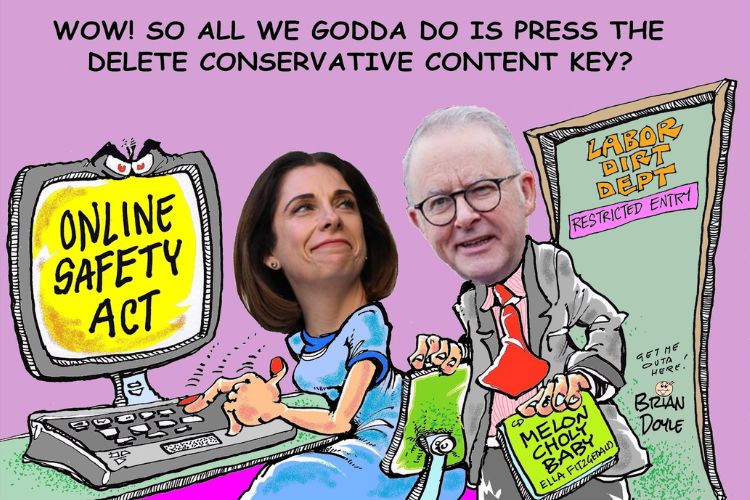
Australia’s proposed digital duty of care laws promise greater online safety and increased user control by switching off algorithms, but critics warn they could give ministers sweeping powers to restrict lawful content and threaten free speech.
16 October 2026
5.2 MINS
Christa Pike’s botched execution has sparked outrage across America, but critics argue that the same concern for human dignity is denied to abortion survivors.
16 October 2026
3.3 MINS
Jesus is calling us to love one another “just as I have loved you”. And if the Church does awaken to that agape (love), the world will see a great and powerful witness to Christ and his kingdom.


