



Relevant Chronology of Aboriginal History
1. In 1967, Prime Minister Harold Holt appointed H.C. Nugget Coombs as Chairman of a new Council of Aboriginal Affairs.
2. In 1972, the Whitlam Government established the National Aboriginal Consultative Committee, which was to become the first national body elected by Aborigines. Although its role was advisory, it was seen as the first step towards Aboriginal self-determination.
3. In 1972, the Whitlam Government established the first separate Department of Aboriginal Affairs.
4. In 1977, the Fraser Government replaced the National Aboriginal Consultative Committee with the National Aboriginal Conference.
5. In 1979, the 278 body proposed a Treaty between the Australian government and Aboriginal nations.
6. In 1981 functions of the Council for Aboriginal Development, previously established by the Fraser government, was taken over by the Aboriginal Development Commission.
7. In 1990, the Hawke government merged the functions of the Aboriginal Development Commission with those of the Department of Aboriginal Affairs to create the Aboriginal and Torres Strait Islander Commission (ATSIC), which became formally responsible for overseeing government programs such as health and education.
8. In 1991, the Hawke government with unanimous cross-party support established the Council for Aboriginal Reconciliation, to promote a process of reconciliation between Aboriginal and Torres Strait Islanders and the wider Australian community”, based on “an appreciation of indigenous cultures and achievements… of… the indigenous peoples of Australia.
9. The Keating government brought in the Native Title Act 1993 (Cth), which rendered a serious threat to our future wellbeing, as it provided Aboriginal holders of native title a land holding with the right to negotiate with anyone who wanted to come onto the land to do business, but did not give them any real property rights. This ushered in government control.
10. ATSIC was formally responsible for overseeing Aboriginal government programs. However, this led to one public scandal after another. This corrupt body was abolished in 2004 by the Howard government with the Labor government support.
11. In April 2010, one of the last actions of the first Rudd government was to establish a new national representative body for Aboriginal Australians, the National Congress of Australian First Peoples (NCAFP). It was established as a private company to, give advice, advocate, monitor and evaluate government programs.
In practice, its chief function was to restore some of the well-paid ATSIC office bearers which its abolition had removed. Consecutive governments have funded it and in May 2016, the Turnbull government refused to continue to fund it, after it spent over 30 million dollars — this included, for a period, paying its co-chairs more than half a million dollars a year.
12. Recognition: In 1991 the Hawke government enacted the Council for Aboriginal Reconciliation Act 1991, under which the Council for Aboriginal Reconciliation was established. Ten years later, the Council established a new private incorporated body, Reconciliation Australia (which subsequently superseded its creator). This body pursued a bewildering array of initiatives and programs in workplaces, schools, including early learning centres and Aboriginal communities, and involved organising a National Reconciliation Week from 27 May to 3 June annually.
13. In 2006, Prime Minister Howard and Professor Mick Dodson launched the Reconciliation Action Plan to be administered by Reconciliation Australia. Among its activities has been the Recognise Campaign, aimed at boosting support among Australians for recognising Aboriginal and Torres Strait Islander peoples in the Constitution.
14. 8 November 2010: Julia Gillard proposed a referendum to amend the Constitution to recognise the special place of our first peoples. She appointed an expert panel on Constitutional Recognition of Indigenous Australians, co-chaired by Professor (now Senator) Pat Dodson and Mr Mark Liebler, with terms of reference to report to the Government on the options for constitutional change and approaches to a referendum that would be most likely to obtain widespread support across the Australian community.
15. On 16 January 2012, this Expert Panel reported, recommending a package of measures:
- Removing Sections 25 and 51(xxvi) from the Constitution. Recognising Aboriginal and Torres Strait Islander peoples in the Constitution and appoint a new head of power to make laws on their behalf (Section 51A).
- A new provision specifically relating to recognition of Aboriginal and Torres Strait Islander languages (Section 127A).
- A new provision removing future capacity on the part of the Commonwealth, the States or the Territories to discriminate on the imputed ground of “race” (Section 116 A).
16. After considering the Expert Panel report, the Gillard government moved to establish a Parliamentary Joint Select Committee on Constitutional Recognition of Aboriginal and Torres Strait Islander Peoples, to inquire into and report on 291 steps that can be taken to progress towards a successful referendum on Indigenous constitutional recognition. It was under the chairmanship of two Aboriginal parliamentarians, Ken Wyatt and Senator Nova Peris.
The Joint Select Committee produced three reports: an Interim Report in July 2014; a Progress Report in October 2014 and a Final Report on 25 June 2015. It recommended s51(xxvi) of the Constitution should be repealed, The Committee heard that Aboriginal and Torres Strait Islander peoples will accept nothing less than a protection from racial discrimination in the Constitution.
17. The Act of Recognition Review Panel: The review was initiated by the Abbott government on 27 March 2014 and chaired by former Deputy Prime Minister John Anderson. It reported on 19 September 2014, and unlike most of its counterparts, it not only carried out its work with a businesslike swiftness, it also seemed to retain contact with reality. Among its important conclusions were:
- That level of awareness for change and its meaning remains low.
- Evidence exists determining the fact we are losing momentum and awareness is drifting.
- Crystallising the question to be put to the Australian voters lies at the heart of the referendum.
The more electors are told about Recognition, the more disenchanted they became. 293 proposals contested for pride of place in the referendum, and electors were disinclined to favour any of them.
18. On 7 December 2015, Malcolm Turnbull and Bill Shorten announced the appointment of the Referendum Council, co-chaired by Patricia Anderson and Mark Leibler. Its task was to consult widely throughout Australia and take the next steps towards achieving constitutional recognition of First Australians. After six months of meetings with organisational leaders around Australia at taxpayers’ expense, the Council produced a discussion paper.
Apart from expressing their opinions in the discussion paper, these meetings elected delegates to attend a first nations National Constitutional Convention at Ayers Rock in May 2017. Meanwhile, the same Aboriginal elites were selected. They developed the new concept of a constitutionally-entrenched Aboriginal advisory body, to sit alongside Parliament with the right to advise on legislation. It is a procedural nightmare and effectively institutes another right to negotiate.
19. It has demanded the establishment of a first nations Voice to be enshrined in the Constitution; a Makarrata Commission to supervise the agreement process between governments and first nations; a declaration including truth-telling about Aboriginal and Torres Strait Islander histories; a Makarrata Commission to supervise the agreement process between governments and first nations, and a declaration to include truth-telling about Aboriginal and Torres Strait Islander history.
___
Originally published at One Voice Australia. Photo by Paul Walker on Unsplash.
Recent Articles:
23 October 2026
6.8 MINS
Hillsong UNITED’s Joel Houston reflects on fame, faith and the burden of ministry, questioning performative Christianity as he seeks a more authentic walk with God.

23 October 2026
13.1 MINS
Tasmania’s proposed conversion practices legislation raises serious questions about religious freedom, pastoral care and whether Christians can freely pray with those seeking to live according to their faith.
23 October 2026
7.7 MINS
Melbourne Catholic Archbishop Peter Comensoli has spoken out clearly against the deadly promises by both major parties in Victoria ahead of the election, drawing a comparison between abortion and capital punishment.
23 October 2026
3.1 MINS
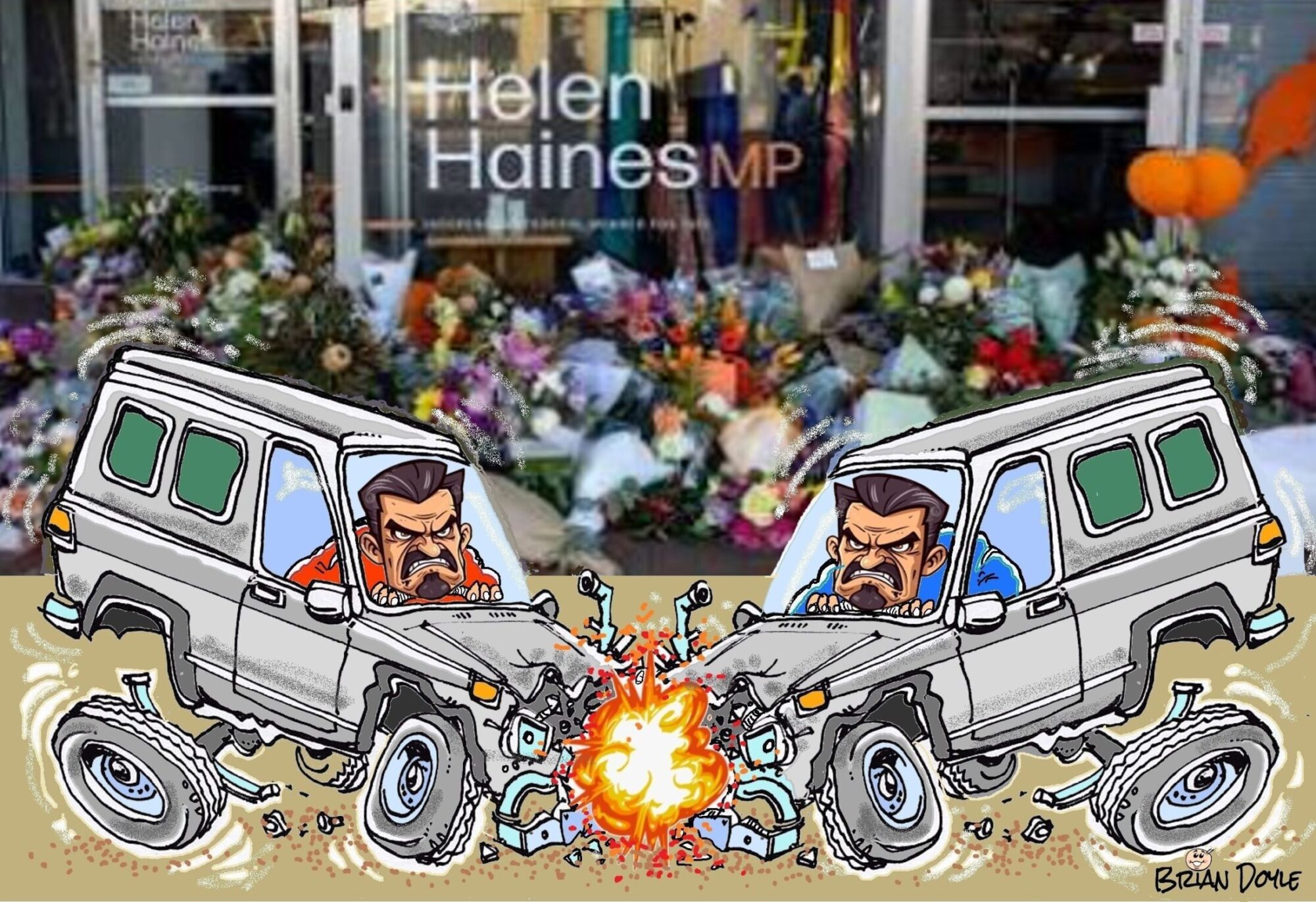
As Western societies grow more hostile, could abandoning Christianity’s moral foundations be contributing to the rise of ideological extremism, political intolerance and violence?

23 October 2026
3.1 MINS
The one who is worthy of it all is awakening his Church to be captivated by him, so that we will honour one another and share his gospel with humility and courage.
22 October 2026
2.9 MINS
Victoria Labor’s promise to fund free abortions has drawn a forceful response from Presbyterian leaders, raising profound questions about unborn life, government priorities and Australia’s moral direction.

22 October 2026
4.7 MINS
Western Australia’s proposed anti-discrimination overhaul has sparked warnings from Christian leaders that religious freedom, parental choice and faith-based schools’ ability to uphold their beliefs are at risk.


